
Essential oil diffuser guide
What Does an Essential Oil Diffuser Do?
An essential oil diffuser moves aroma from a compatible essential oil or scent formulation into the surrounding air. Different products achieve that through water-based ultrasonic mist, direct-oil atomization, airflow or passive evaporation.
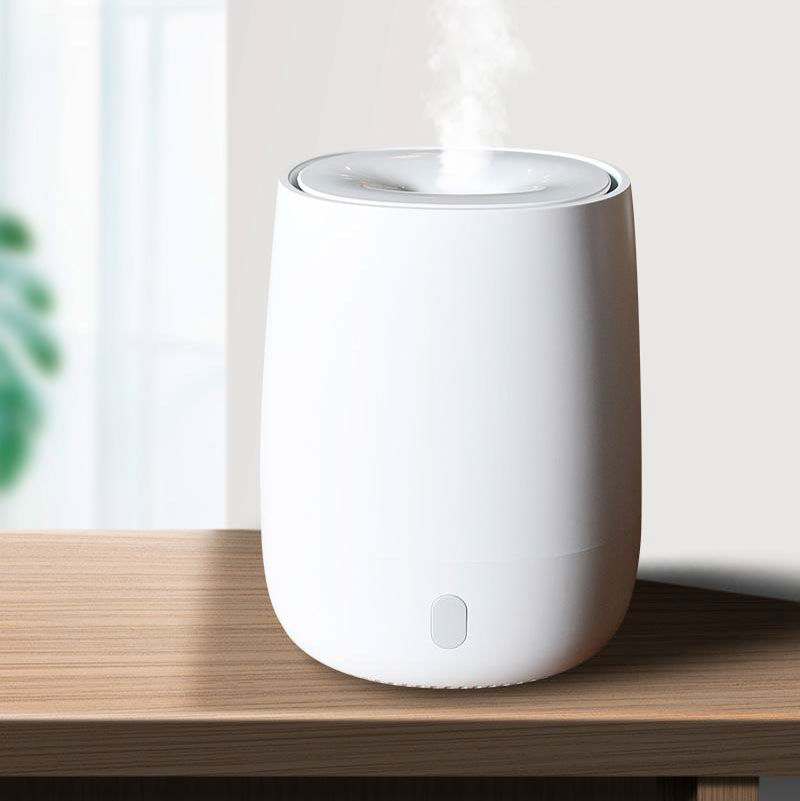
Direct answer
An essential oil diffuser disperses aromatic material into the air so a scent can be experienced within a space. An ultrasonic diffuser vibrates water and compatible oil into a fine mist. A waterless or nebulizing diffuser atomizes compatible oil without a water tank. Fan, reed and passive diffusers rely on airflow or evaporation. A diffuser is not automatically an air purifier, medical device or full-room humidifier.
What Happens Inside an Essential Oil Diffuser?
The mechanism changes, but the functional sequence is broadly the same: store a compatible aromatic liquid, move it into the air, disperse it through the room and control how strongly or continuously it is released.
The liquid is held
Oil, water-and-oil mixture, fragrance formulation, scented pad or reed liquid is placed in the part designed for that product.
The mechanism releases aroma
Ultrasonic vibration, pressurized airflow, a fan, capillary action, porous material or gentle warming transfers volatile aromatic material from the liquid source.
Air carries the scent
The released droplets or vapour mix with the surrounding air. Room airflow, doors, ventilation and placement influence where the aroma travels.
Controls shape the experience
Depending on the model, output, timer, intermittent cycle, fan speed or lighting may be adjustable. These features must be verified rather than assumed.
“Diffuser” describes a product family, not one machine. A USB ultrasonic unit, a bottle-fed waterless diffuser and a reed vessel can all diffuse scent while using entirely different liquids, parts and maintenance routines.
How Do the Main Essential Oil Diffuser Types Work?
This article focuses on function rather than cataloguing every format. For the full product comparison, read AromaLeap’s guide to the types of essential oil diffusers.
| Diffuser mechanism | What it does | Uses water? | Typical scent character | Main maintenance area |
|---|---|---|---|---|
| Ultrasonic | A ceramic plate vibrates a water-and-oil mixture into a fine, water-based mist, while a small airflow path carries mist out of the unit. | Yes | Soft to moderate, depending on the model, liquid and room | Reservoir, cover, air inlet and atomizing plate |
| Waterless direct-oil | A compact atomizing system draws compatible oil from a bottle or reservoir and disperses it without a water tank. | No | Direct and adjustable | Bottle fit, pickup tube, nozzle and oil pathway |
| Glass nebulizing | Air pressure moves compatible oil through fine glass pathways and releases a concentrated spray. | No | Often concentrated | Glass tubes, reservoir, nozzle and pump airflow |
| Evaporative fan | A fan moves air across a scented pad, wick or filter, accelerating evaporation. | Usually no | Light to moderate | Pad or filter and airflow path |
| Reed or passive | Reeds, ceramic or porous material absorb a suitable formulation and release scent gradually through natural evaporation. | No | Continuous and subtle | Reeds, vessel, porous surface and spill protection |
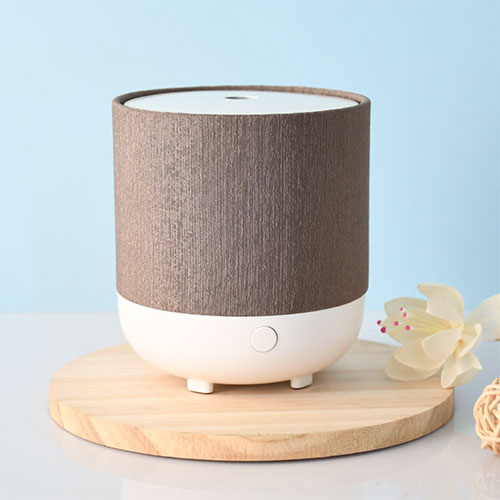
Commercial readers can compare AromaLeap’s ultrasonic aroma diffusers, waterless diffusers and nebulizing diffusers.
What Can—and Cannot—an Essential Oil Diffuser Do?
| Question | Practical answer | Important limitation |
|---|---|---|
| Can it make a room smell different? | Yes. Fragrance delivery is the core purpose of a diffuser. | Intensity and coverage depend on output, formulation, room volume, ventilation and placement. |
| Can it create ambience? | Scent, visible mist, design and optional lighting can contribute to the atmosphere of a room. | Mood and personal response are subjective; no diffuser guarantees relaxation, sleep or concentration. |
| Can it add moisture? | An ultrasonic diffuser releases a water-based mist and therefore adds some moisture while running. | Most compact aroma diffusers should not automatically be presented as replacements for dedicated room humidifiers. |
| Can it remove bad odours? | It can introduce a more pleasant scent and may change how a space smells. | It does not remove the source of smoke, mould, spoiled material, poor drainage or inadequate ventilation. |
| Can it purify the air? | A standard essential oil diffuser is not an air cleaner. | Air purification requires equipment designed and tested for particle or gas removal; fragrance alone is not filtration. |
| Can it provide medical treatment? | A diffuser can be used for aroma and personal fragrance preference. | It should not be marketed as a medical inhaler, disease treatment or guaranteed therapeutic device. |
For the humidity question, see the detailed diffuser vs humidifier comparison. The U.S. EPA distinguishes air cleaners by their ability to filter particles or gases, which is a different function from releasing fragrance into a room.
Covering an odour is not correcting indoor air quality. When a space smells of smoke, moisture, mould, chemicals or drainage, locate and address the source and improve ventilation as appropriate. Adding a stronger fragrance merely gives the original problem a better-dressed companion.
What Changes How Well a Diffuser Scents a Room?
Mechanism and output
A passive stone and a programmed direct-oil diffuser do not release scent at the same rate. Compare verified output settings and intended use rather than appearance alone.
Liquid compatibility
Essential oils, fragrance oils, reed formulations and commercial scenting oils differ in composition and viscosity. Use only a liquid approved for the exact diffuser.
Room volume and airflow
Open doors, air-conditioning, ceiling height and ventilation influence scent movement. Coverage claims should be verified for the selected model and operating conditions.
Placement
The outlet needs clear airflow and safe distance from electronics, untreated surfaces, walls and fabrics that could be affected by moisture or oil.
Runtime and programming
Continuous, intermittent and scheduled operation produce different scent patterns and oil consumption. Use the model’s verified controls and manual.
Cleaning and maintenance
Residue, blocked airflow, an incorrectly fitted bottle or a dirty atomizing plate can reduce performance. Maintenance differs by mechanism.
For oil selection, review AromaLeap’s information on wholesale essential oils and diffuser oil wholesale. Compatibility testing should use the intended diffuser and formulation together.
How Is an Essential Oil Diffuser Used?
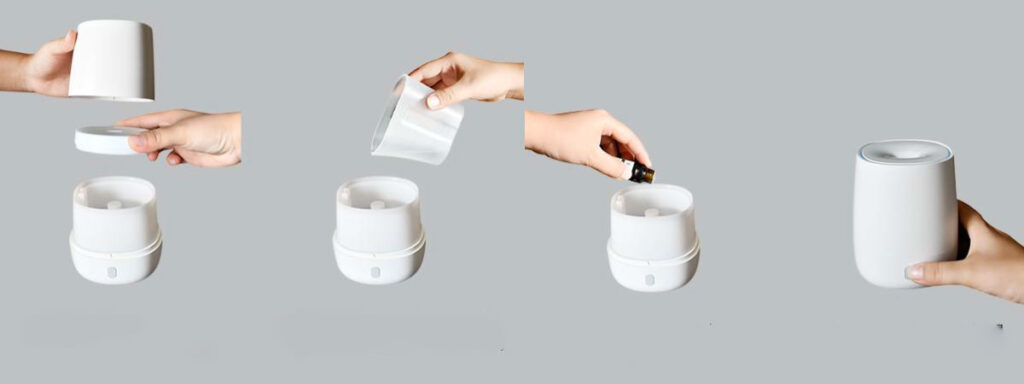
The operating method depends on the mechanism:
- Identify whether the unit is ultrasonic, waterless, nebulizing, fan-driven or passive.
- Use the stated water, oil, fragrance formulation, bottle, pad or reeds.
- Fill or assemble only to the model’s marked limits and instructions.
- Select verified output, timer or lighting settings.
- Use moderate scent intensity and normal room ventilation.
- Empty, wipe, flush or replace components using the approved maintenance method.
The complete operating sequence belongs in AromaLeap’s guide to how to use an essential oil diffuser. Maintenance and faults are covered separately in how to clean a diffuser and why a diffuser may not be misting.
Where Are Essential Oil Diffusers Used?
Diffusers appear in consumer, retail, hospitality and promotional projects, but the correct mechanism depends on the space and service expectations.
Homes and personal spaces
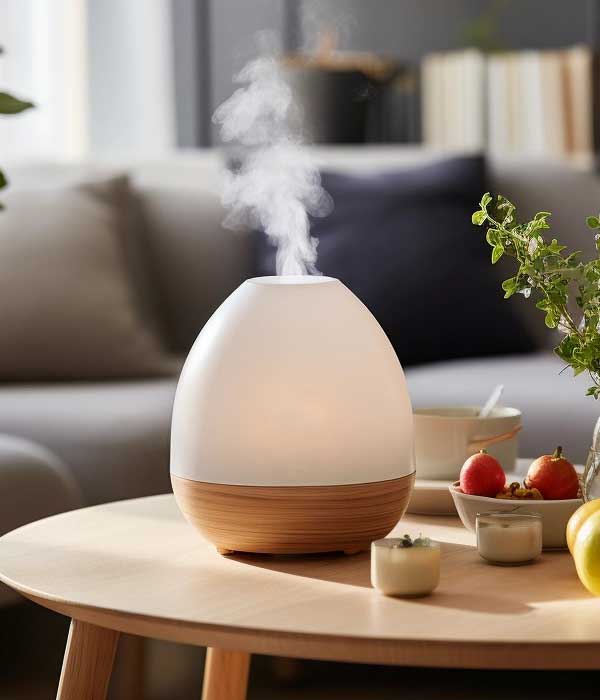
Compact ultrasonic, passive and portable models are commonly chosen for local fragrance, decorative appeal and straightforward operation.
Offices and desks
Buyers often prioritize compact size, low operating noise, simple controls, spill resistance and modest scent output.
Hotels, spas and wellness retail
Projects may require quiet operation, consistent appearance, easy cleaning, replacement parts, multilingual instructions and controlled scent intensity.
Stores, showrooms and larger spaces
Programmable waterless systems may be more suitable where coverage, scheduling, refill access and repeatable output matter more than visible water mist.
For brands, retailers and hospitality buyers
Define the Diffuser’s Job Before Selecting the Product
“We need a diffuser” is a beginning, not a specification. A buyer should first decide what the product must do for the end customer and what maintenance, noise, power and refill system the market will accept.
- Target environment and intended room size
- Required mechanism: ultrasonic, waterless, nebulizing or passive
- Compatible essential oil or fragrance formulation
- Desired scent intensity and output control
- Power, plug, voltage, charging or battery configuration
- Verified timer, intermittent mode, lighting or app functions
- Cleaning access and acceptable maintenance routine
- Noise expectations and sample-test method
- Materials, finish, packaging and damage protection
- User manual, warnings and destination-language requirements
AromaLeap’s wholesale oil diffuser range covers multiple mechanisms and use formats. Buyers can also review the diffuser quality-control process before confirming samples, packaging and written specifications.
Continue Your Diffuser Research
Frequently Asked Questions
What does an essential oil diffuser do?
An essential oil diffuser moves aroma from a compatible oil or fragrance formulation into the surrounding air. Depending on the product, it may use ultrasonic water mist, direct-oil atomization, a fan, reeds or passive evaporation.
How does an ultrasonic essential oil diffuser work?
An ultrasonic diffuser uses a vibrating ceramic plate to create a fine mist from water and a model-compatible amount of essential oil. A small airflow path carries the mist out of the unit. The exact water, oil quantity and controls depend on the model.
Does an essential oil diffuser purify the air?
No. A standard diffuser releases fragrance; it does not filter particles or gases like equipment designed and tested as an air cleaner. It should not be marketed as removing smoke, mould, formaldehyde or other pollutants.
Does an essential oil diffuser humidify a room?
An ultrasonic diffuser adds some moisture while releasing its water-based mist, but many compact aroma diffusers have limited output and should not automatically be treated as substitutes for dedicated room humidifiers. Waterless and passive diffusers add no water.
Can a diffuser remove bad smells?
A diffuser can introduce another fragrance and change how a room smells, but it does not remove the source of smoke, mould, spoiled material, drainage problems or poor ventilation. Correct the odour source rather than relying only on scent.
Do all essential oil diffusers need water?
No. Ultrasonic diffusers normally use water. Waterless direct-oil and glass nebulizing diffusers do not, while fan, reed and passive ceramic products use pads, formulations or porous materials instead of a water tank.
Can fragrance oil be used in an essential oil diffuser?
Only when the fragrance oil is formulated and approved for that diffuser. Oils developed for candles, reeds, HVAC scent machines or waterless atomizers may be unsuitable for an ultrasonic water tank. Test the intended liquid and device together.
Is it safe to leave an essential oil diffuser running unattended?
Do not assume unattended or overnight operation is suitable. Follow the exact manual and verify the timer, low-water detection, automatic shutoff, battery and power functions for the selected model. Stop using a leaking, damaged or unusually hot unit.
Planning a Diffuser Range for Your Market?
Share the intended application, diffuser mechanism, target market, preferred design, liquid, required functions, packaging needs and estimated quantity. AromaLeap can help compare suitable models and prepare the next sample-review steps.
Discuss Your Diffuser ProjectEditorial references: U.S. EPA guide to residential air cleaners; NCCIH lavender safety overview; Poison Control essential-oil safety guidance.
General educational guidance only. Follow the instructions supplied with the exact diffuser and aromatic product.