
9 Types of Essential Oil Diffusers: How They Work and Which to Choose
A practical comparison of ultrasonic, nebulizing, waterless, evaporative, reed, ceramic, heat, car and personal diffuser formats—with honest trade-offs for consumers and professional buyers.
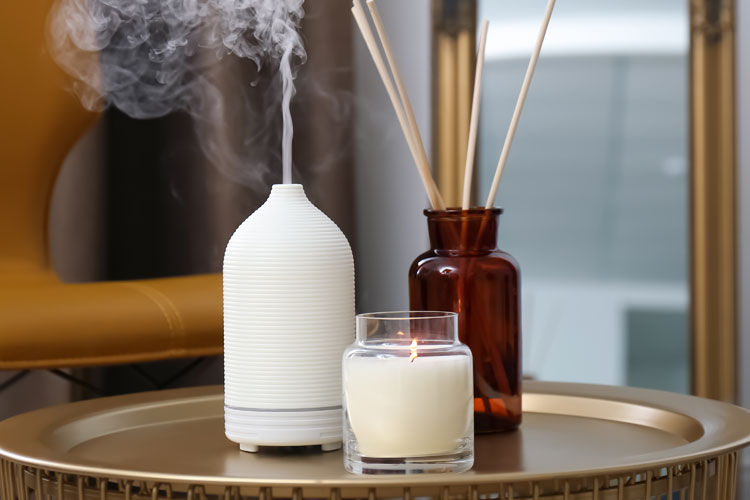
The main types of essential oil diffusers are ultrasonic, nebulizing, waterless direct-oil, evaporative fan, reed, ceramic or stone passive, heat, car and personal diffusers. They differ in how they move fragrance into the air: water-based ultrasonic mist, pressure-air atomization, natural evaporation, airflow, capillary action, porous absorption or gentle warming. No single type is best for every user or brand.
The word diffuser describes a broad product family rather than one mechanism. A glass nebulizer, a USB ultrasonic unit and a reed bottle can all diffuse scent, yet their internal structures, compatible liquids, output, cleaning and customer expectations are quite different.
This guide explains the nine most useful categories for product selection. Readers looking for commercial models can also compare AromaLeap’s broader wholesale oil diffuser range. Technical details should always be confirmed for the exact diffuser and liquid being evaluated.
How Essential Oil Diffuser Types Are Classified
Diffusers can be grouped in two ways: by working mechanism and by use format. Ultrasonic, pressure-air, evaporation, capillary action, porous absorption and heat are mechanisms. Car and personal diffusers are use formats that may contain one of those mechanisms.
A car diffuser may be ultrasonic, fan-driven or waterless. A ceramic diffuser may contain an ultrasonic tank or may simply absorb and evaporate oil. Product names should therefore describe both the format and the verified mechanism whenever possible.
This distinction matters for search accuracy and for purchasing. A model that looks like a compact wood cylinder could contain a water reservoir, a direct-oil bottle or an absorbent pad. Appearance alone does not reveal the operating principle.
9 Types of Essential Oil Diffusers at a Glance
| Type | How it works | Water | Typical scent character | Main maintenance | Common best fit |
|---|---|---|---|---|---|
| Ultrasonic | High-frequency vibration creates a water-based mist. | Yes | Soft to moderate | Tank and atomizing plate | Home fragrance, gifting, spas |
| Nebulizing | Airflow and pressure atomize compatible oil directly. | No | Usually concentrated | Glass tubes, reservoir or nozzle | Specialist aromatherapy, premium retail |
| Waterless direct-oil | An enclosed atomizing system disperses compatible oil without a water tank. | No | Direct and adjustable | Bottle, straw, nozzle and oil pathway | Portable, desk, retail and selected commercial uses |
| Evaporative fan | A fan moves air across a scented pad, wick or filter. | Usually no | Light to moderate | Replace or clean pad/filter | Desk, travel and compact products |
| Reed | Fragrance travels up reeds by capillary action and evaporates. | No | Continuous and subtle | Refill liquid, replace or turn reeds | Homes, hotels, offices and gifting |
| Ceramic or stone passive | A porous material absorbs oil and releases it gradually. | No | Gentle and local | Reapply oil; avoid staining surfaces | Small spaces and decorative gifts |
| Heat | A warming element or candle increases evaporation. | Varies | Warm, local and model-dependent | Clean dish; manage heat source | Short-duration ambience and decorative use |
| Car | May use a pad, fan, ultrasonic tank or direct-oil atomizer. | Varies | Designed for a small vehicle cabin | Depends on mechanism | Vehicle accessories and portable ranges |
| Personal | Usually relies on a wick, absorbent insert or compact fan. | Usually no | Very local | Refresh or replace insert | Desk, travel and individual use |
Category-level guidance only: scent perception, sound, runtime, oil use and room suitability vary with the exact model, liquid, settings, placement, ventilation and user sensitivity.
1Ultrasonic Diffusers
An ultrasonic diffuser combines water with a suitable quantity of essential oil and uses a vibrating atomizing component to create a cool mist. The mist then travels through the outlet, sometimes assisted by a small fan or designed airflow pathway.
Ultrasonic models are common because they can provide visible mist, relatively soft scent delivery and many design options. Selected models may include timers, lights, remote controls or automatic low-water shutoff, but these functions must be confirmed for each product.
Ultrasonic diffusers add some moisture while operating, but most small aroma diffusers should not be presented as replacements for dedicated room humidifiers. Buyers comparing materials, capacities and functions can review AromaLeap’s ultrasonic aroma diffuser range.
2Nebulizing Diffusers
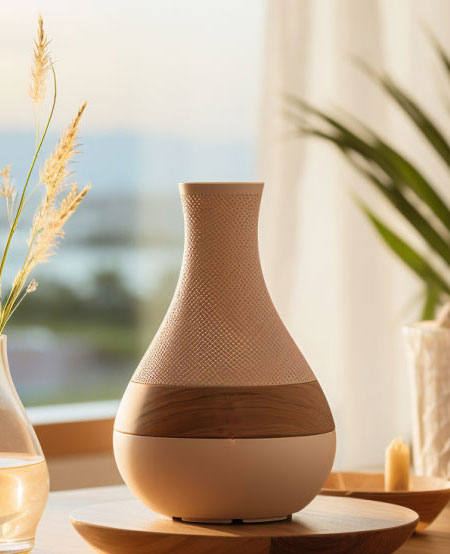
A nebulizing diffuser uses moving air and pressure conditions to draw compatible oil toward an atomizing point and break it into airborne liquid droplets. Classic versions often expose shaped glass tubes and a visible oil reservoir as part of the design.
Because no water tank dilutes the liquid, the scent profile is generally more concentrated than an ultrasonic mist. The trade-offs can include more noticeable pump sound, faster oil consumption, fragile glass parts and more frequent cleaning with certain oils.
For a deeper technical explanation, read how a nebulizing diffuser works. Commercial buyers can explore AromaLeap’s nebulizing diffuser formats.

3Waterless Direct-Oil Diffusers
Waterless diffusers form a broader category than classic glass nebulizers. A compact model may connect directly to an oil bottle, draw liquid through a straw or use another enclosed micro-atomization structure. The exact mechanism should be verified rather than inferred from the word waterless.
These products can support portable, desk, car and selected commercial scenting formats. Buyers should examine nozzle design, bottle compatibility, leakage protection, operating cycle, sound, oil consumption and cleaning access.
4Evaporative Fan Diffusers
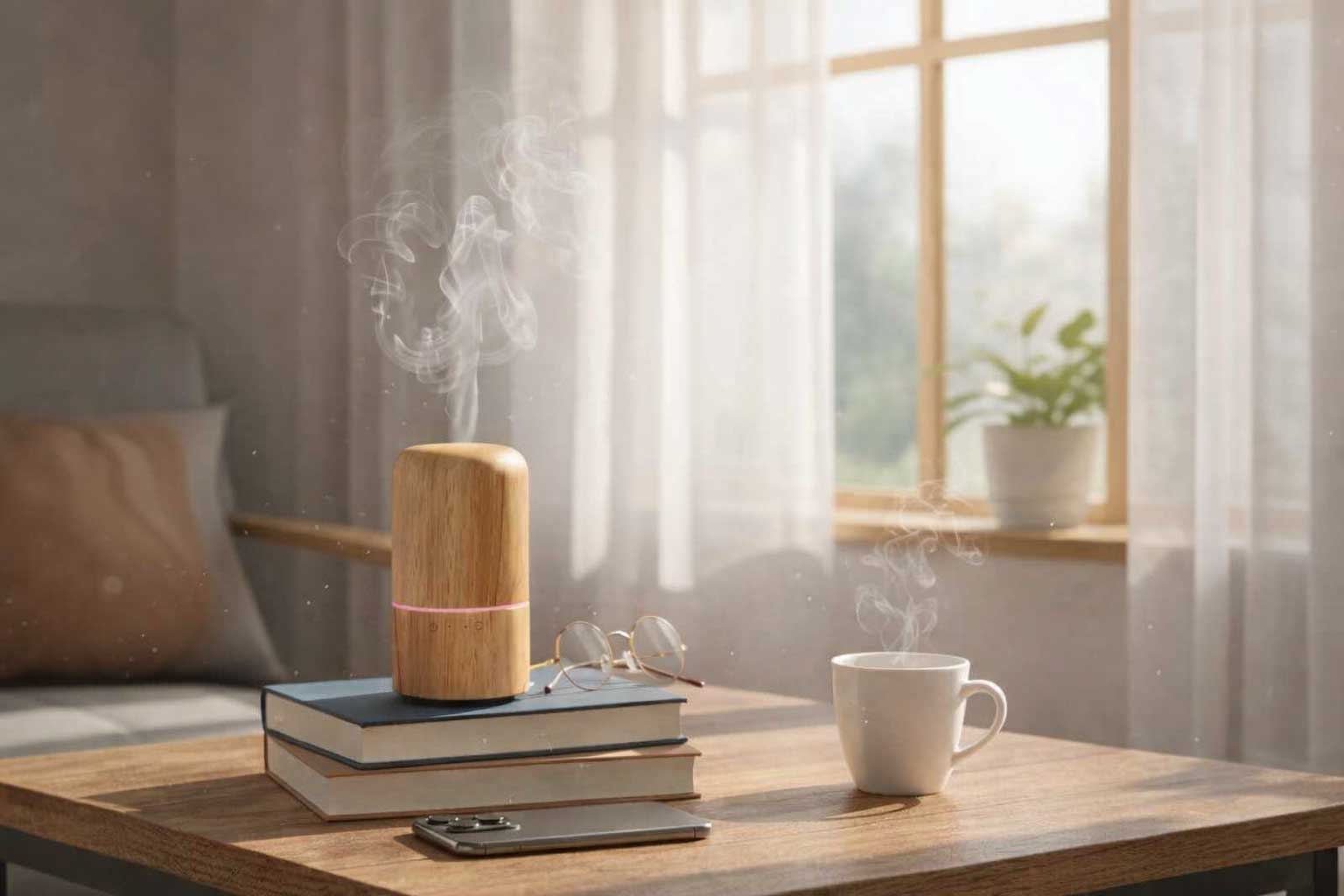
An evaporative diffuser moves air across a wick, scented pad or filter. The increased airflow speeds natural evaporation and distributes the fragrance farther than a completely passive object.
This format is usually compact and mechanically simple. It can work well for desk, travel and personal-space products, but output may become uneven as different components of the fragrance evaporate at different rates. Pad replacement, fan sound and refill availability are practical buying points.
5Reed Diffusers
Reed diffusers use capillary action. Fragrance liquid travels up porous reeds and evaporates from their exposed surfaces. They use no electricity, fan or water reservoir and can provide a continuous, low-intensity scent.
Performance depends on the reed material, number and diameter of reeds, fragrance formulation, bottle opening, room airflow and temperature. A liquid made for an electronic diffuser is not automatically suitable for reeds. Brands developing passive products should match the vessel, reeds and diffuser oil formulation as one system.
6Ceramic and Stone Passive Diffusers
Porous ceramic, unglazed stone or similar materials absorb a small amount of oil and release it slowly through natural evaporation. These products are often decorative, silent and suitable for local scenting rather than whole-room coverage.
The phrase ceramic diffuser can also describe an electronic ultrasonic diffuser with a ceramic cover. Buyers should therefore distinguish between a passive porous object and an active electronic diffuser. AromaLeap’s ceramic diffuser page covers active decorative models for wholesale projects.
7Heat Diffusers
Heat diffusers use a candle, warming plate, bulb or another controlled heat source to increase evaporation. Some models warm diluted fragrance in a dish, while others use wax, water or a pad. The correct liquid and operating instructions depend on the product.
These diffusers can create a warm decorative atmosphere, but they require more safety attention than cold-mist or passive designs. Open flames, hot surfaces, fill levels, vessel stability and supervision should be addressed in the product instructions.
8Car Essential Oil Diffusers
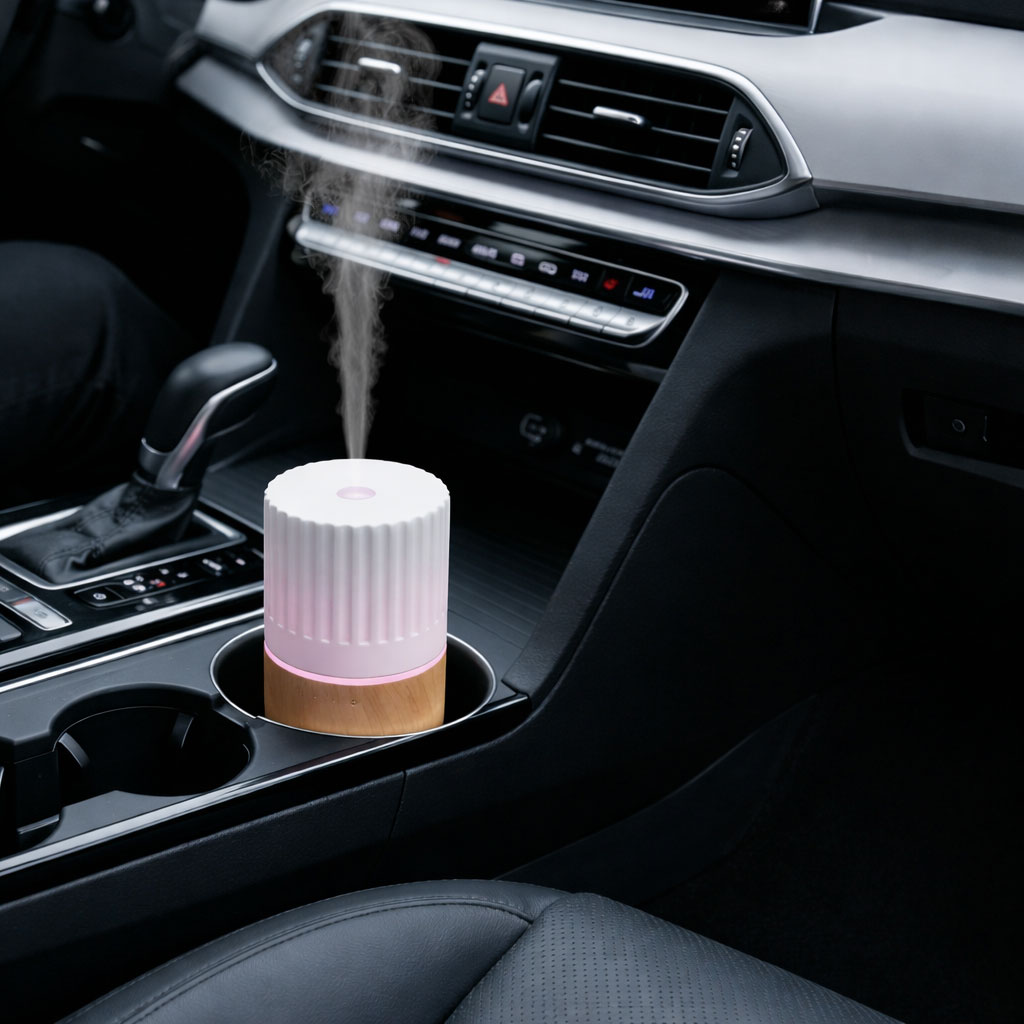
A car diffuser is a use format rather than one technical mechanism. Products may clip to an air vent, sit in a cup holder, connect by USB, use a felt pad, create an ultrasonic mist or atomize compatible oil without water.
Vehicle products should be evaluated for dimensions, placement, stability, leakage, temperature exposure, cable routing, controls and driver distraction. Fragrance intensity can feel stronger inside a small cabin, so adjustable or intermittent operation may be valuable.
AromaLeap’s oil fragrance diffuser options provide another route for compact and portable product discussions.
9Personal and Wearable Diffusers
Personal diffusers keep fragrance close to one user rather than scenting an entire room. Common designs include pendants, inhaler-style aroma sticks, bracelet inserts, pocket fans and compact desk products.
The term covers many structures, so the liquid should be used only as directed for the particular device. Products intended for ambient aroma should not be described as medical inhalation devices. Material contact, leakage, refill method and replacement inserts are key considerations.
How to Choose the Right Type of Essential Oil Diffuser
The useful question is not “Which diffuser is best?” but “Which diffuser best matches the liquid, room, customer and maintenance expectations?” Start with the following decisions.
Choose by desired scent intensity
Reed, stone and personal formats usually provide subtle local scent. Ultrasonic models offer water-based ambient mist. Nebulizing and selected waterless products generally create a more concentrated scent.
Choose by room and placement
A bedside table, hotel lobby, car cup holder and retail shelf require different capacities, controls, stability and maintenance. Avoid relying on a universal coverage claim.
Choose by maintenance tolerance
Ultrasonic tanks need regular cleaning. Nebulizers need oil-path or glass cleaning. Reed diffusers need reeds and refills. Fan diffusers need pads or filters.
Choose by product position
Material, finish, lighting, packaging and accessories influence whether a diffuser feels like an everyday product, premium décor piece, travel accessory or professional scenting tool.
Essential oils, fragrance oils, reed-diffuser liquids and commercial scent formulations are not interchangeable by default. Viscosity, solvents, carrier materials, resinous components and residue can affect atomization, evaporation, plastics, seals and cleaning. Test the intended liquid with the intended diffuser.
For a focused side-by-side decision, see AromaLeap’s diffuser vs. nebulizer guide. Brands building a complete product range may also use the aroma diffuser selection guide for wholesale buyers.
What B2B Buyers Should Check Before Ordering Diffusers
A catalogue category is only the beginning. A reliable sourcing decision requires the exact model, liquid, packaging and destination-market requirements to be reviewed together.
Product and performance
- Verified operating mechanism and accurate product name
- Actual liquid or formulation used during sample testing
- Output stability, sound, leakage, residue and cleaning
- Capacity, power, controls and safety functions by model
Retail and supply readiness
- Logo, colour, material, finish and acceptable variation
- Retail box, insert, manual, labels, barcodes and accessories
- Model-specific reports and documents for the destination
- MOQ, timing, inspection and logistics confirmed for the project
Review AromaLeap’s custom diffuser support for OEM and private-label development, and the diffuser quality-control guide for specification, function and packaging checks.
Which Diffuser Types Fit Common Applications?
| Application | Useful starting categories | Buyer questions |
|---|---|---|
| Home-fragrance retail | Ultrasonic, reed, ceramic, nebulizing | What price tier, décor style, scent strength and maintenance level suit the customer? |
| Hotels and hospitality | Reed, ultrasonic, selected waterless systems | Will the product be used in guest rooms, retail shelves, reception areas or larger public spaces? |
| Spas and wellness | Ultrasonic, reed, selected nebulizing | How important are sound, visual design, cleaning and adjustable scent intensity? |
| Corporate gifting | Compact ultrasonic, ceramic, reed, personal | What logo, box, insert, manual, power and delivery-date requirements apply? |
| Vehicle accessories | Car fan, passive vent clip, compact waterless, selected ultrasonic | Does the model fit securely, resist leakage and operate safely in vehicle temperatures? |
| Subscription boxes | Personal, ceramic passive, compact ultrasonic, reed miniatures | Do dimensions, fragility, refill method, instructions and pack weight suit repeated fulfilment? |
Frequently Asked Questions
What are the main types of essential oil diffusers?
Which type of essential oil diffuser is best?
What is the difference between ultrasonic and nebulizing diffusers?
Is every waterless diffuser a nebulizing diffuser?
Do ultrasonic diffusers humidify a room?
Can the same oil be used in every diffuser type?
Which diffuser types do not use electricity?
Which diffuser type is quietest?
What should wholesale buyers test in a diffuser sample?
Can diffuser products be customized for private label?
Continue Reading
About AromaLeap
AromaLeap is a China-based B2B manufacturer of aroma diffusers, essential oils, fragrance oils, candles and related home-fragrance products. The team supports model selection, OEM/ODM development, private-label packaging, quality planning and export coordination.
Evaluating Diffuser Types for Your Brand?
Share your intended market, product format, liquid, target price direction, functions, estimated quantity and packaging requirements. AromaLeap can help identify practical model routes for sample evaluation.
Discuss Your Diffuser Project →