
Most diffuser problems do not appear in a catalogue photo. They appear after the order arrives: a tank that leaks, a fan that sounds louder than the sample, inconsistent mist output, damaged packaging, or a logo that begins to rub off after a few weeks.
At that point, the unit price is no longer the most important number. Returns, replacement freight, customer complaints, and delayed launches usually cost far more than the small amount saved by choosing the cheapest quotation.
Buying wholesale essential oil diffusers is therefore less about finding one attractive model and more about controlling risk before mass production. A good sourcing process covers product fit, sample testing, customization, quality inspection, packaging, spare parts, lead time, and written order specifications.
This guide focuses on evaluating the supplier and preparing the order. For a detailed comparison of ultrasonic, waterless, reed, and nebulizing products, read our guide to choosing the right aroma diffuser for your brand.

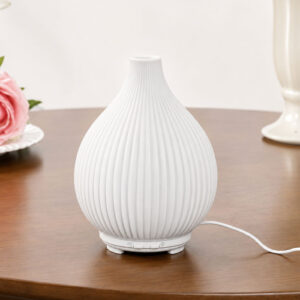
Ultrasonic diffusers mix water with a small amount of essential oil and use vibration to create a fine mist. They are widely used for home wellness, gifting, spas, hotel rooms, and retail product lines because they are familiar to consumers and available in many sizes and designs.
When comparing wholesale models, test the mist output, operating noise, water capacity, timer settings, lighting, auto shut-off, leakage protection, and ease of cleaning. The lid and water tank should also fit securely after repeated use.
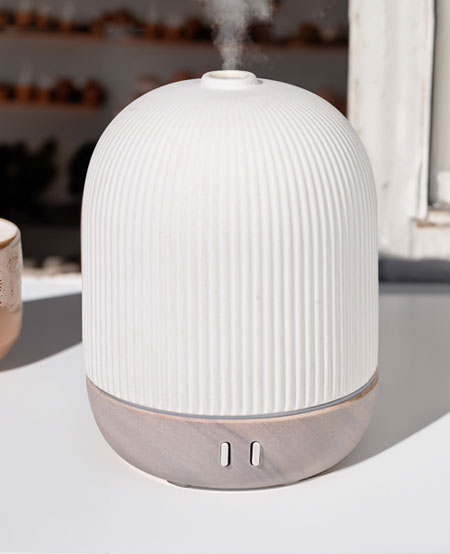
Nebulizing diffusers atomize essential oil without adding water. They usually produce a stronger aroma than ultrasonic models and are often selected by premium aromatherapy brands, wellness stores, and professional users. Buyers sourcing these products can review AromaLeap’s nebulizing diffuser manufacturer and wholesale range for model options, OEM/private-label support and sourcing considerations.
Before ordering, check the oil-consumption rate, atomization consistency, operating noise, glass-part durability, cleaning method, and availability of replacement parts. Buyers should also confirm which essential oils are suitable for the equipment, as thicker oils may require additional cleaning or special handling.

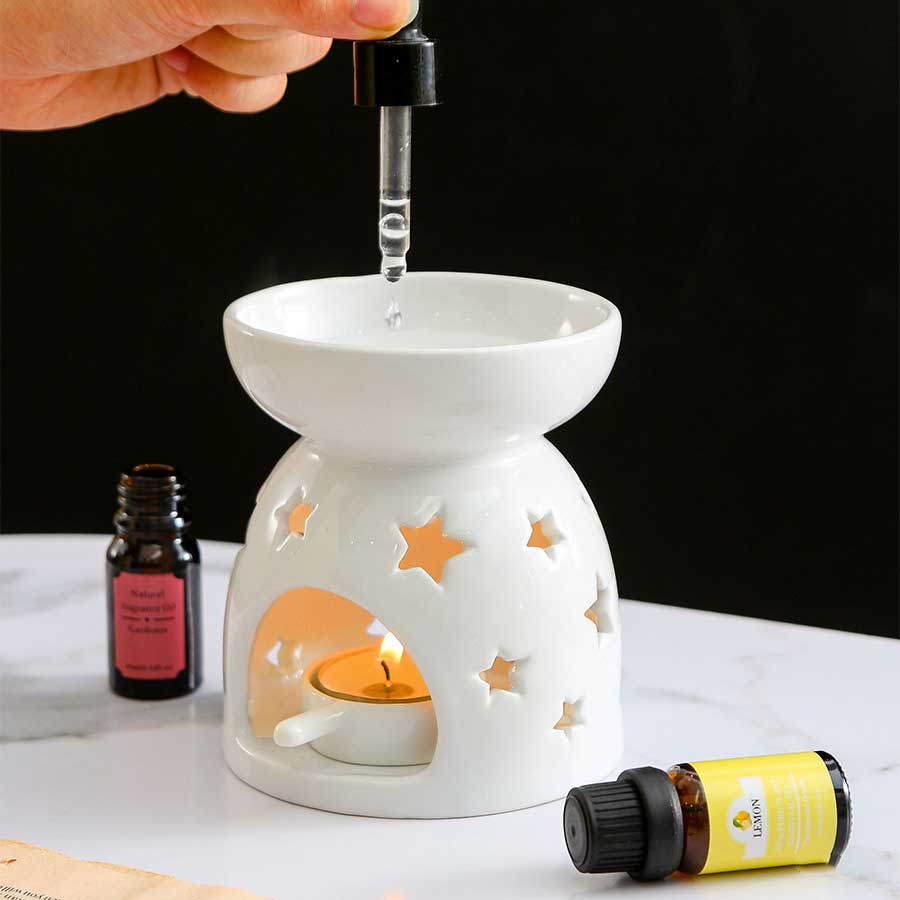
Heat-based diffusers warm an aromatic material so that the scent gradually enters the surrounding air. They are generally simple to operate and may suit decorative home-fragrance products, small rooms, or lower-cost retail ranges.
Buyers should check the operating temperature, surface safety, material durability, power source, fragrance compatibility, and stability during extended use. Because heat can affect aromatic materials differently, test the intended oil or fragrance with the actual device before approving mass production.
Fan and evaporative diffusers move air across a scented pad, filter, or absorbent material. Their compact size makes them useful for cars, desks, travel products, wardrobes, and portable fragrance collections.
For wholesale orders, test the fan noise, battery life, scent strength, refill-pad availability, replacement process, and airflow consistency. If the product uses a proprietary refill, confirm that replacement supplies can be produced reliably for future orders.

| Diffuser Type | Typical Market Fit | What the Buyer Should Test |
|---|---|---|
| Ultrasonic diffuser | Home wellness, gifts, spas, hotel rooms, and retail | Mist output, noise, tank capacity, timer, leakage, and cleaning |
| Nebulizing diffuser | Premium aromatherapy and specialist wellness brands | Atomization, oil consumption, glass durability, noise, and spare parts |
| Heat-based diffuser | Decorative home fragrance, small rooms, and value-focused ranges | Temperature, surface safety, material quality, and fragrance compatibility |
| Fan or evaporative diffuser | Cars, travel, desks, wardrobes, and portable products | Battery life, fan noise, refill availability, airflow, and scent output |
A buyer should first decide where the diffuser will be used, how much space it must cover, and how much maintenance the end customer will accept. Only then does price comparison become meaningful.
A polished sample is encouraging, but it does not prove that the supplier can repeat the same result across a production order. The real question is whether the supplier has a reliable process for turning an approved sample into hundreds or thousands of consistent units.
Ask the supplier to provide a written specification for the model you approve. It should identify the material, colour, tank capacity, power input, accessories, plug type, functions, logo method, packaging, and any performance requirements agreed during sampling.
Keep one approved sample as the reference sample. When production is inspected, the finished units should be compared with that reference—not merely with a product photograph or an old catalogue description.
“Quality checked” sounds reassuring, but it is not a test plan. Ask which checks are performed during incoming inspection, assembly, ageing, and final inspection.
Depending on the diffuser model, useful checks may include:
You can also review AromaLeap’s diffuser quality-control process when discussing inspection requirements.
Adding a logo is usually straightforward. Changing the housing colour, material, tank, electronics, packaging structure, or mould is a different level of project.
Ask the supplier to separate standard customization from full OEM or ODM development. The quotation should clearly show any sample fees, artwork fees, tooling costs, mould costs, packaging charges, and additional lead time.
For projects requiring custom colours, functions, packaging, or a unique housing design, review AromaLeap’s custom diffuser development options.
No sensible buyer expects electronics to exist in a world without occasional defects. What matters is how the issue is measured, documented, and resolved.
Before paying the deposit, ask what happens if units fail inspection or customers report repeated faults. The answer should cover replacement parts, replacement units, technical support, warranty terms, and responsibility for confirmed production defects.
A supplier may be able to produce one successful batch and still struggle with repeat orders. Confirm whether the same components, finishes, packaging, and software can be maintained in future production.
For retailers and private-label brands, repeatability is often more valuable than an unusually low introductory price. Customers notice when the second batch looks, sounds, or performs differently from the first.

A polished sample is encouraging, but it does not prove that the supplier can repeat the same result across a production order. The real question is whether the supplier has a reliable process for turning an approved sample into hundreds or thousands of consistent units.
Ask the supplier to provide a written specification for the model you approve. It should identify the material, colour, tank capacity, power input, accessories, plug type, functions, logo method, packaging, and any performance requirements agreed during sampling.
Keep one approved sample as the reference sample. When production is inspected, the finished units should be compared with that reference—not merely with a product photograph or an old catalogue description.
“Quality checked” sounds reassuring, but it is not a test plan. Ask which checks are performed during incoming inspection, assembly, ageing, and final inspection.
Depending on the diffuser model, useful checks may include:
You can also review AromaLeap’s diffuser quality-control process when discussing inspection requirements.
Adding a logo is usually straightforward. Changing the housing colour, material, tank, electronics, packaging structure, or mould is a different level of project.
Ask the supplier to separate standard customization from full OEM or ODM development. The quotation should clearly show any sample fees, artwork fees, tooling costs, mould costs, packaging charges, and additional lead time.
For projects requiring custom colours, functions, packaging, or a unique housing design, review AromaLeap’s custom diffuser development options.
No sensible buyer expects electronics to exist in a world without occasional defects. What matters is how the issue is measured, documented, and resolved.
Before paying the deposit, ask what happens if units fail inspection or customers report repeated faults. The answer should cover replacement parts, replacement units, technical support, warranty terms, and responsibility for confirmed production defects.
A supplier may be able to produce one successful batch and still struggle with repeat orders. Confirm whether the same components, finishes, packaging, and software can be maintained in future production.
For retailers and private-label brands, repeatability is often more valuable than an unusually low introductory price. Customers notice when the second batch looks, sounds, or performs differently from the first.

A detailed quotation often tells you more about a supplier than a beautifully designed brochure. Before confirming the order, make sure the following points have clear written answers.
A supplier who answers these questions clearly is making the buyer’s job easier. A supplier who answers every question with “no problem” may simply be postponing the problem.
The lowest unit price is not always the lowest purchasing cost. A useful comparison includes the product, accessories, printing, packaging, sample charges, tooling, testing, inspection, freight, duty, and the likely cost of defects or replacements.
For example, one quotation may include a stronger retail box, a certified adapter, printed instructions, and logo application, while another quote excludes all four. The second price may look cheaper until the missing items are added.
Create one comparison sheet and ask every supplier to quote against the same specification. This removes much of the guesswork and makes it easier to see where the differences really are.
A diffuser can leave the factory in perfect condition and still arrive with a cracked cover, scratched surface, or crushed gift box. The retail packaging and export carton are part of the product, especially for gift, subscription-box, and private-label customers.
Before mass production, confirm the inner protection, retail-box material, instruction manual, barcode position, shipping marks, carton quantity, carton dimensions, and gross weight. For new packaging structures, request a packed sample rather than approving the artwork alone.

The safest diffuser order is not necessarily the one with the longest contract or the highest price. It is the order where both buyer and supplier are working from the same approved sample, product specification, quality standard, packaging requirement, and delivery schedule.
Start with the intended market and application. Test the sample in realistic conditions. Record every approved detail. Then ask the supplier to confirm how those details will be controlled during mass production.
That process may take slightly longer before the deposit is paid, but it is usually much faster than explaining a preventable product problem after the shipment has arrived.
AromaLeap is based in China and was founded in 2010. It is engaged in the professional design and manufacturing of essential oils, fragrance oils, and diffusers. With ISO certifications and two subsidiaries, our focus is on eco-friendly, long-lasting products.