

Compatibility at a Glance
Which Oils Can Go in a Nebulizing Diffuser?
Identify the exact model, atomizer and permitted liquid category before choosing an oil. Use the nebulizing diffuser range to compare equipment, then review the selected oil with that model’s instructions.
| Oil / Liquid Type | Typical Suitability | What to Check | Practical Direction |
|---|---|---|---|
| Pure essential oil | Common for glass nebulizers Often the intended liquid for classic essential-oil nebulizers. |
Exact model instructions, viscosity, residue and cleanliness. | Use only the amount and oil category specified for the diffuser. |
| Pure essential-oil blend | Often suitable Provided the blend contains only compatible essential oils and no heavy carrier base. |
Check the complete blend, not only the front-label fragrance name. | Test the final blend in the actual diffuser before a wholesale launch. |
| Viscous / resinous essential oil | Use caution Some glass-nebulizer designs can struggle with oils that are thick or leave more residue. |
Oil draw, micro-tube or nozzle restriction, residue and cleaning frequency. | Test first and clean sooner if the model instructions require it. |
| Fragrance / diffuser oil | System-specific Suitable only for systems designed for that type of fragrance formulation. |
Formulation, viscosity, solvents/carriers, seals, atomizer and residue. | For compatible B2B liquid projects, use AromaLeap's diffuser oil wholesale route. |
| Carrier-oil blend | Usually avoid in classic glass Carrier oils can be too heavy for narrow glass pathways. |
Whether the diffuser manufacturer explicitly permits the carrier system. | Do not use massage or roll-on blends simply because they contain essential oil. |
| Water / DIY dilution | Not normal nebulizer use A classic direct-oil nebulizer is not an ultrasonic water-tank diffuser. |
Only follow a cleaning or operating procedure that explicitly calls for water or another liquid. | Do not invent a dilution recipe to make an unsuitable oil flow. |
AromaLeap Product Guidance
Start With the Exact AromaLeap Model
The Flora Scent Diffuser is described for pure essential oils in its product information. Confirm the instructions supplied with the approved unit. For another glass nebulizer or enclosed cold-air model, request its specified liquid category before selecting samples.
For the Flora model: use pure essential oil according to the supplied product instructions. Confirm any proposed alternative liquid with the equipment supplier before use.
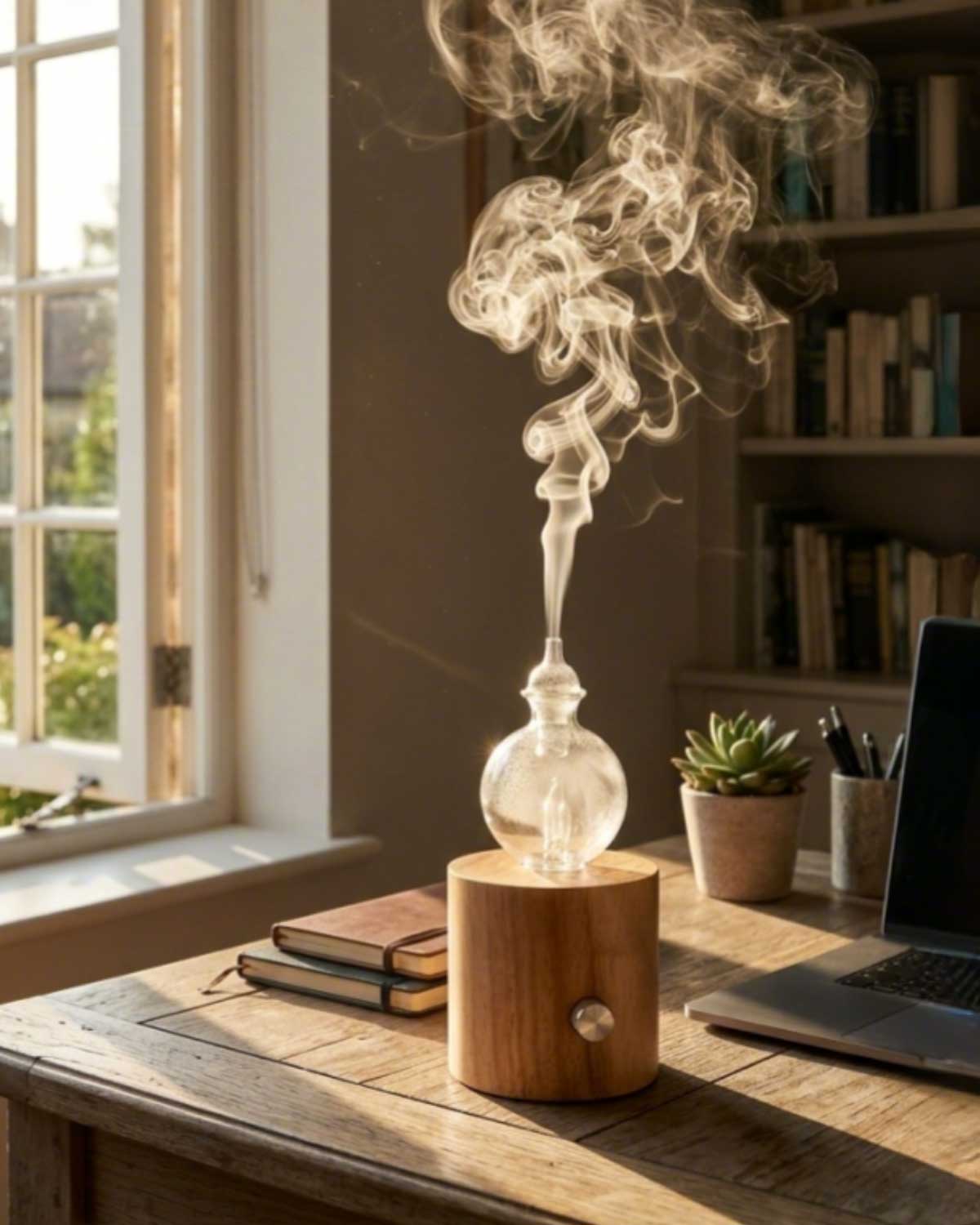

Pure Essential Oils
Why Pure Essential Oils Are the Standard Starting Point for Many Glass Nebulizers
Classic glass nebulizers use airflow and pressure to draw liquid through a narrow pathway and break it into fine droplets. Because there is no separate water tank, the liquid must move through that small oil pathway directly.
That is why many classic designs specify pure essential oils with no water and no carrier oil. A pure essential-oil blend may also be appropriate when every component of the blend is suitable for the selected model.
Flowing Pure Essential Oils
For models designed for pure essential oil, start with the diffuser manufacturer's approved oil type and observe normal draw, mist and cleaning behaviour.
Pure Essential-Oil Blends
A blend may still be compatible, but the full composition matters. A “blend” containing carrier oil is a different liquid from a blend made only from essential oils.
For a pure-essential-oil sourcing brief, explore wholesale essential oils and include your diffuser model, selected oil or blend, quantity and destination in the sample discussion.
Viscosity & Residue
Thick or Resinous Essential Oils Need More Caution
“Pure” does not automatically mean “easy to atomize.” Some very viscous, resinous or residue-forming essential oils can move more slowly through narrow tubes and can increase cleaning needs.
Some manufacturers publish restrictions for thicker or resinous oils. Check the current instructions for the selected device and any oil-specific guidance before evaluating the actual combination.test the actual oil in the actual diffuser.
- Observe whether the oil reaches the atomizing point consistently.
- Compare mist stability after startup and during a normal operating cycle.
- Inspect the glass or oil pathway for unusual build-up.
- Follow the model-specific cleaning method sooner if residue increases.
- Do not thin the oil with an improvised solvent unless the formulation and machine suppliers approve it.
If oil residue or scent carryover becomes part of the problem, use AromaLeap's dedicated How to Clean a Nebulizing Diffuser guide rather than turning this compatibility article into another maintenance page.
Fragrance Oils
Can You Use Fragrance Oil in a Nebulizing Diffuser?
Sometimes—but only when the equipment and formulation are designed to work together. The term “nebulizing” is also used for some enclosed cold-air commercial systems that atomize compatible fragrance oils. That is different from assuming that any fragrance oil can be poured into a classic glass essential-oil nebulizer.
For a formulated scent-oil project, identify the exact machine and fragrance reference in your waterless or cold-air oil supply brief. Include oil draw, residue and maintenance observations from sample evaluation.
Do Not Assume Fragrance Oil
If the product is specified for pure essential oil, keep that rule unless AromaLeap confirms another liquid category for the exact model.
Compatible Formulations Can Be Used
For systems designed around formulated scent oils, approve the specific fragrance with the specific atomizer and cleaning process before bulk production.
What Not to Pour In
Liquids to Avoid Unless the Exact Model Explicitly Allows Them
- Carrier-oil blends: coconut, jojoba, almond, grapeseed and similar carrier systems can be too viscous for some classic micro-tube designs.
- Roll-on or massage oils: these are formulated for skin application, not automatically for atomization.
- Reed-diffuser liquid: a reed-diffuser base is a different finished-product system and should not be treated as a nebulizer oil by default.
- Water: classic nebulizing operation normally does not use a water tank.
- Homemade alcohol or solvent dilution: changing the formulation can affect atomization, materials, safety information and cleaning.
- Unidentified fragrance oil: if the supplier cannot define the intended application and formulation reference, compatibility becomes difficult to control.
Why One Oil Works and Another Does Not
Five Variables Decide Nebulizing Diffuser Compatibility
Viscosity
The oil must move through the liquid pathway at the intended pump and atomizer conditions. There is no useful universal viscosity number for every nebulizer.
Residue & Oxidation
Some liquids leave more film or become more difficult to draw after sitting in the reservoir. This affects cleaning and repeat performance.
Formulation Composition
Carrier systems, synthetic fragrance components, suspended materials and solvents can change how the liquid behaves inside the atomizer.
Atomizer & Material Design
Glass micro-tubes, internal nozzles, seals, straws and enclosed atomizers do not all respond to the same liquids in the same way.
Cleaning & Service Routine
An oil can appear to work initially but create too much maintenance for the intended customer. Compatibility should include cleaning behaviour, not only first-day mist.
For the airflow and atomization mechanism, read how a nebulizing diffuser works. Use the selected model’s instructions to connect that mechanism with its permitted oil category.
For Wholesale Buyers
How to Approve an Oil + Nebulizer Combination Before Bulk Production
For private-label brands, importers and distributors, the goal is not merely to prove that “mist comes out.” The approved combination should remain practical through repeated use, cleaning, packing and reorder cycles.
Identify the Exact Nebulizer
Record the model, atomization structure, reservoir/bottle format and product instructions before discussing oils.
Define the Intended Oil
Use the actual essential oil, blend or fragrance formulation planned for sale—not a convenient substitute used only for sample testing.
Observe Real Operation
Check startup, oil draw, mist stability, scent output, leakage, abnormal sound and any visible residue.
Clean and Retest
Use the approved cleaning procedure, then confirm that performance returns normally after the maintenance cycle.
Record the Approved Combination
Record the diffuser model, oil reference, operating guidance, cleaning method and final customer instruction as part of the approved project specification.
