
Diffuser vs. Nebulizer: What’s the Difference?
A practical comparison of ultrasonic diffusers and nebulizing diffusers, covering how each technology works, the scent experience, maintenance, oil use and the questions buyers should ask before choosing a model.


A nebulizer is technically a type of diffuser. In common product searches, however, “diffuser” usually means an ultrasonic aroma diffuser: a device that vibrates a water-and-oil mixture into mist. A nebulizing diffuser uses airflow to atomize a compatible oil directly, so it generally creates a more concentrated scent but may use more oil, produce more audible pump sound and require different cleaning.
First, What Does “Diffuser” Mean?
Essential oil diffuser is an umbrella term. It can describe ultrasonic, nebulizing, evaporative, heat-based and other scent-dispersion devices. This is why a literal “diffuser vs. nebulizer” comparison is slightly awkward: a nebulizer already belongs to the wider aroma diffuser category.
Most people asking this question are actually comparing an ultrasonic diffuser with a nebulizing diffuser. This article uses “diffuser” as shorthand for ultrasonic diffuser only where the comparison would otherwise become unbearably repetitive. The terminology may be imperfect; the shopping intent is crystal clear.
Diffuser vs. Nebulizer at a Glance
The table below compares category-level characteristics. Individual products can behave differently, so room suitability, output, sound, runtime, oil consumption and maintenance should be confirmed for the selected model.
| Comparison point | Ultrasonic diffuser | Nebulizing diffuser |
|---|---|---|
| Liquid system | Water plus a suitable quantity of essential oil or compatible fragrance. | Compatible oil used directly; no separate water tank in classic designs. |
| Mist formation | A piezoelectric plate vibrates the liquid and creates water-based droplets. | Airflow and pressure draw and shear the oil into airborne droplets. |
| Scent character | Usually softer and more ambient because the oil is dispersed with water. | Usually more concentrated and immediate because the oil is atomized directly. |
| Humidity | Adds some moisture while operating, depending on the model and room conditions. | Not designed to add humidity. |
| Typical sound | Often quieter, although fan, water and vibration sounds may remain. | Air-pump and airflow sound can be more noticeable. |
| Oil use | Typically uses a smaller quantity of oil mixed into a water reservoir. | Can consume oil more quickly because it disperses oil directly. |
| Maintenance focus | Water tank, scale, residue and ultrasonic atomizing plate. | Oil pathway, nozzle, glass reservoir or feed tube, depending on design. |
| Materials | Plastic, ceramic, glass, metal and wood-look covers are common. | Classic glass structures, protected glass and enclosed housings are common. |
| Typical positioning | Mainstream home fragrance, gifting, desk, spa and lifestyle collections. | Specialist aromatherapy, premium design-led ranges and direct-oil scenting. |
| Main buyer risk | Leakage, scale, weak mist, incorrect capacity or feature mismatch. | Oil incompatibility, blockage, pump sound, glass breakage or high oil use. |
On a phone, swipe horizontally to view the full table. The comparison does not replace model-specific specifications or user instructions.
How an Ultrasonic Diffuser Works
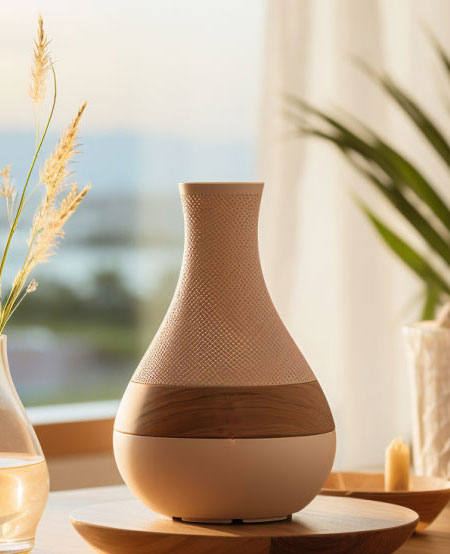
An ultrasonic diffuser combines a water reservoir, a suitable quantity of essential oil, a piezoelectric atomizing component, controls and an air outlet. The plate vibrates at high frequency beneath the liquid, producing small water-based droplets that are carried out as cool mist.
The water reservoir influences product size, refill frequency and possible operating duration. Controls may include mist levels, intermittent operation, timers, lighting or other functions, but availability varies by model.
For commercial selection, the wholesale ultrasonic diffuser guide explains capacities, materials, customization, packaging and quality checks in more detail.
Fill the reservoir
Add water to the stated level and only the quantity and type of oil permitted by the model instructions.
Activate the atomizing plate
The piezoelectric component vibrates the liquid and forms small water-based droplets.
Move mist toward the outlet
A fan or airflow pathway directs the mist through the product outlet.
Clean the water system
Residue and mineral scale can affect output, so the tank and plate need model-approved care.
How a Nebulizing Diffuser Works
A nebulizing diffuser uses an air pump or another pressure-air pathway to move air rapidly across or through a narrow atomizing point. The airflow and local pressure conditions help draw oil toward the air stream, where the liquid is sheared into fine droplets.
In a classic glass nebulizer, larger droplets may strike the internal glass and return to the reservoir while finer droplets leave through the outlet. Enclosed two-fluid models perform a related air-and-liquid atomizing process inside a protective housing.
For the detailed mechanism, component list and maintenance factors, read How Does a Nebulizing Diffuser Work?. Commercial formats are covered separately on the nebulizing diffuser manufacturer page.

The Differences That Matter in Real Use
1. Water and scent concentration
An ultrasonic diffuser distributes oil through a larger volume of water mist. This usually produces a softer, more ambient scent. A nebulizer atomizes compatible oil directly, so the fragrance often feels faster and more concentrated. “Stronger” is not automatically “better”; a hotel room, bedroom, retail display and specialist aromatherapy setting can require very different experiences.
2. Humidity
Ultrasonic units release water droplets and therefore add some moisture while operating. They should not automatically be treated as replacements for purpose-built humidifiers, because the amount of moisture depends on the diffuser output and room conditions. Nebulizers do not use a water reservoir and are not intended to humidify.
3. Oil consumption
Ultrasonic models generally use a relatively small quantity of oil per water fill. Nebulizers may use oil faster because they deliver it directly. Output level and duty cycle are crucial: an intermittent setting can provide a strong scent experience without running the pump continuously.
4. Sound
Ultrasonic diffusers are often chosen for quieter environments, although fan, water and vibration noises can still exist. Nebulizers rely on an air pump or motor-airflow structure, so sound can be more noticeable. Product housing, mounting, airflow, operating mode and the surface beneath the diffuser all affect what the user hears.
5. Cleaning
An ultrasonic diffuser requires regular tank and atomizing-plate care, especially where hard water leaves scale. A nebulizer requires oil-pathway cleaning because residue can restrict narrow tubes or nozzles. Thick, resinous or oxidized oils may increase maintenance. This is why buyers should test the intended formulation rather than a convenient substitute.
6. Durability and transport
Many ultrasonic diffusers use protective outer covers and enclosed water tanks. Classic nebulizers frequently make glass part of the product’s visual identity, which creates a premium presentation but also introduces breakage and replacement-part considerations. Packaging tests should reflect the real product orientation, accessories and courier conditions.
7. Product positioning
Ultrasonic designs cover a broad price and style range, from compact plastic models to decorative ceramic and glass products. Nebulizing products often tell a more specialist story built around direct-oil atomization, visible glass engineering or premium materials. Buyers should match technology to the customer—not ask one machine to play every role in the orchestra.
Which Is Better: a Diffuser or a Nebulizer?
Neither technology wins every category. The better choice depends on the intended environment, scent strength, acceptable sound, oil budget, cleaning routine, product positioning and customer expectations.
You want gentle water-based mist
- Quiet positioning matters
- The customer expects a familiar water reservoir
- Longer ambient operation is preferred
- Broad gifting or lifestyle appeal matters
- Decorative ceramic, glass or plastic options are useful
You want direct-oil scent delivery
- A concentrated scent profile is important
- No water tank is preferred
- The product supports specialist aromatherapy retail
- Visible glass engineering suits the brand
- Customers can follow oil and cleaning guidance
Best-Fit Applications
Home-fragrance retail
Ultrasonic models are familiar, visually varied and suitable for broad lifestyle collections. Nebulizers can create a premium sub-range where direct-oil operation and customer education support the price position.
Spas and wellness businesses
Evaluate sound, cleaning, scent intensity and operating controls in the actual treatment or reception environment. A calm-looking product is not automatically a quiet product.
Gifting and subscription programs
Ultrasonic gift sets may be easier for mainstream customers. Nebulizer sets require careful glass protection, compatible oil, replacement-part planning and very clear instructions.
Hotels and commercial spaces
Small tabletop diffusers and larger scenting equipment solve different jobs. Confirm room conditions, operating schedule and maintenance responsibility before specifying a consumer-style unit.
What B2B Buyers Should Test Before Ordering
Do not choose from catalogue photographs alone. Approve the actual diffuser, oil, controls, accessories and packaging configuration that will be ordered. AromaLeap’s diffuser quality-control guide provides a broader framework for specification and inspection planning.
Match the oil to the machine
The diffuser and its consumable liquid form one system. Viscosity, residue, carrier ingredients and material compatibility can change output and maintenance. For commercial scent formulations, review the diffuser oil wholesale page and state the exact machine during sampling.
Confirm documentation by model and market
Ask which reports, declarations, labels, manuals, plugs and packaging statements are available for the selected product and destination. Do not assume that one certificate image applies to an entire diffuser catalogue. For branding and packaging routes, see AromaLeap’s custom diffuser service.
Approve packaging around the vulnerable parts
Glass components, water tanks, adapters, cables, oil bottles and decorative finishes require different protective structures. Review the complete packed set and outer carton—not only the diffuser sitting heroically beneath studio lighting.
The Practical Verdict
Choose an ultrasonic diffuser when you want a softer water-based mist, quieter positioning, broad design variety and familiar everyday operation. Choose a nebulizing diffuser when direct-oil atomization, concentrated scent and specialist product positioning matter more than oil economy or near-silent operation.
For wholesale buyers, the real decision should come after side-by-side sample testing with the intended liquid, packaging and user instructions. Appearance attracts the first order; compatibility and repeatable performance decide whether the product earns the second.
Frequently Asked Questions
Is a nebulizer the same as an essential oil diffuser?
A nebulizer is one type of essential-oil diffuser. In everyday product searches, however, “diffuser” often refers specifically to an ultrasonic water-based diffuser, while “nebulizer” refers to an air-driven direct-oil diffuser.
What is the main difference between an ultrasonic diffuser and a nebulizer?
An ultrasonic diffuser vibrates a water-and-oil mixture to create a water-based mist. A nebulizing diffuser uses moving air to atomize a compatible oil directly, normally without a separate water tank.
Does a nebulizing diffuser use water?
Classic glass nebulizers and many enclosed two-fluid models normally use a compatible oil directly and do not require a separate water reservoir. Confirm the exact liquid system for the selected model.
Which produces a stronger scent: a diffuser or a nebulizer?
A nebulizing diffuser usually creates a more concentrated scent profile because the output is not primarily a water mist. Actual intensity still depends on the oil, output setting, room conditions and product design.
Which type usually operates more quietly?
Ultrasonic diffusers are often quieter because they do not rely on the same pressure-air pump used in many nebulizers. Both categories can still produce fan, airflow, vibration or water sounds, so buyers should test the exact model.
Do nebulizers use more essential oil?
They can consume oil more quickly because they disperse compatible oil directly rather than diluting a small quantity in water. Consumption varies substantially with output level, duty cycle, oil viscosity and product design.
Which diffuser is easier to clean?
Neither category is maintenance-free. Ultrasonic units need water-tank, scale and atomizing-plate care. Nebulizers need the oil pathway, nozzle or glass atomizing structure cleaned according to the model instructions.
Can every essential oil be used in a nebulizer?
No universal compatibility should be assumed. Thick, resinous, oxidized or residue-forming liquids may move poorly through narrow pathways or require more frequent cleaning. Test the intended formulation with the intended device.
Which option is better for a private-label product range?
The better option depends on the target customer and price position. Ultrasonic diffusers suit broad home-fragrance and gifting ranges, while nebulizing products can support specialist aromatherapy and premium design-led collections. Sampling should come before a bulk decision.
What should wholesale buyers test before ordering?
Test the approved model with the intended oil and power configuration. Review mist stability, scent level, sound, leakage, controls, cleaning access, glass protection, packaging, accessories and the documents required for the destination market.
Comparing Diffuser Models for Your Brand?
Share the target market, product format, intended oil, required functions, packaging needs and destination country so suitable ultrasonic or nebulizing models can be reviewed for sampling.
Discuss Your Diffuser Project