
Plan a branded refill range around the oil, diffuser and packaging your customers will use. Define the supply format, approve identifiable samples and compare quotations against the same product specification.
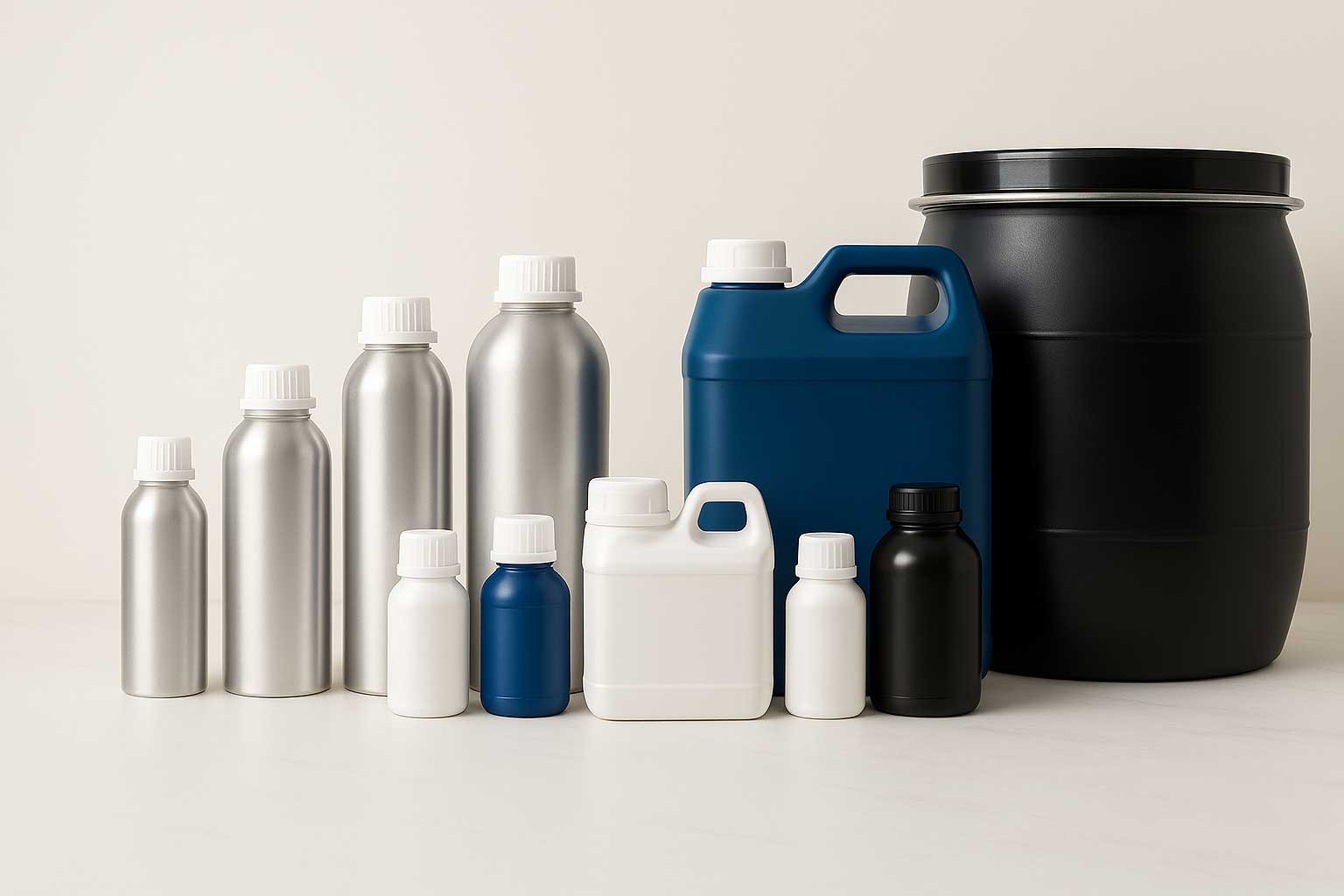
Approve the fragrance, diffuser and refill packaging together before ordering a branded range. A useful sequence is product brief → scent samples → equipment and bottle checks → artwork approval → agreed order specification.
A refill project starts with the customer’s diffuser, not the bottle artwork. Decide whether you are supplying a finished ready-to-use refill for a defined machine, a reed-diffuser refill or a fragrance concentrate for further formulation. Put that distinction in the brief and on the approved product specification.
For electronic scenting, identify the exact model, bottle connection and approved liquid category. For reeds, define the base, bottle and reeds as a finished system. Use the waterless oil guide or the nebulizing oil guide if you are still confirming the equipment requirements.
Start with a small set of scent directions that serve your customers and sales channel. A core range might compare tea, citrus-herbal and woody profiles; the final mix depends on your brand and sample feedback.
Use the diffuser-oil scent collection to describe the directions you want to sample. White Tea, Lemon Basil & Citrus and Sandalwood Bark provide contrasting references. Confirm the selected formulation and intended use for each sample. If you need another direction, discuss a brief or reference for custom fragrance development.
For an unfamiliar fragrance name, confirm its composition category before writing natural or essential-oil claims. The White Tea comparison guide shows why this matters.
| Supply route | Useful when | Confirm before approval |
|---|---|---|
| Bulk oil container | You fill locally or supply commercial service teams. | Container material, closure, dispensing method, agreed quantity and transport requirements. |
| Branded refill bottle | You sell a finished refill through retail or distribution. | Fill quantity, bottle fit, closure, seal, dispensing, artwork and market information. |
| Gift or retail carton | Shelf presentation or a coordinated brand range matters. | Bottle protection, carton dimensions, product identification and approved artwork. |
| Machine-connected bottle | The container forms part of the diffuser’s oil pathway. | Neck, thread, cap, straw or adaptor fit with the actual machine. |
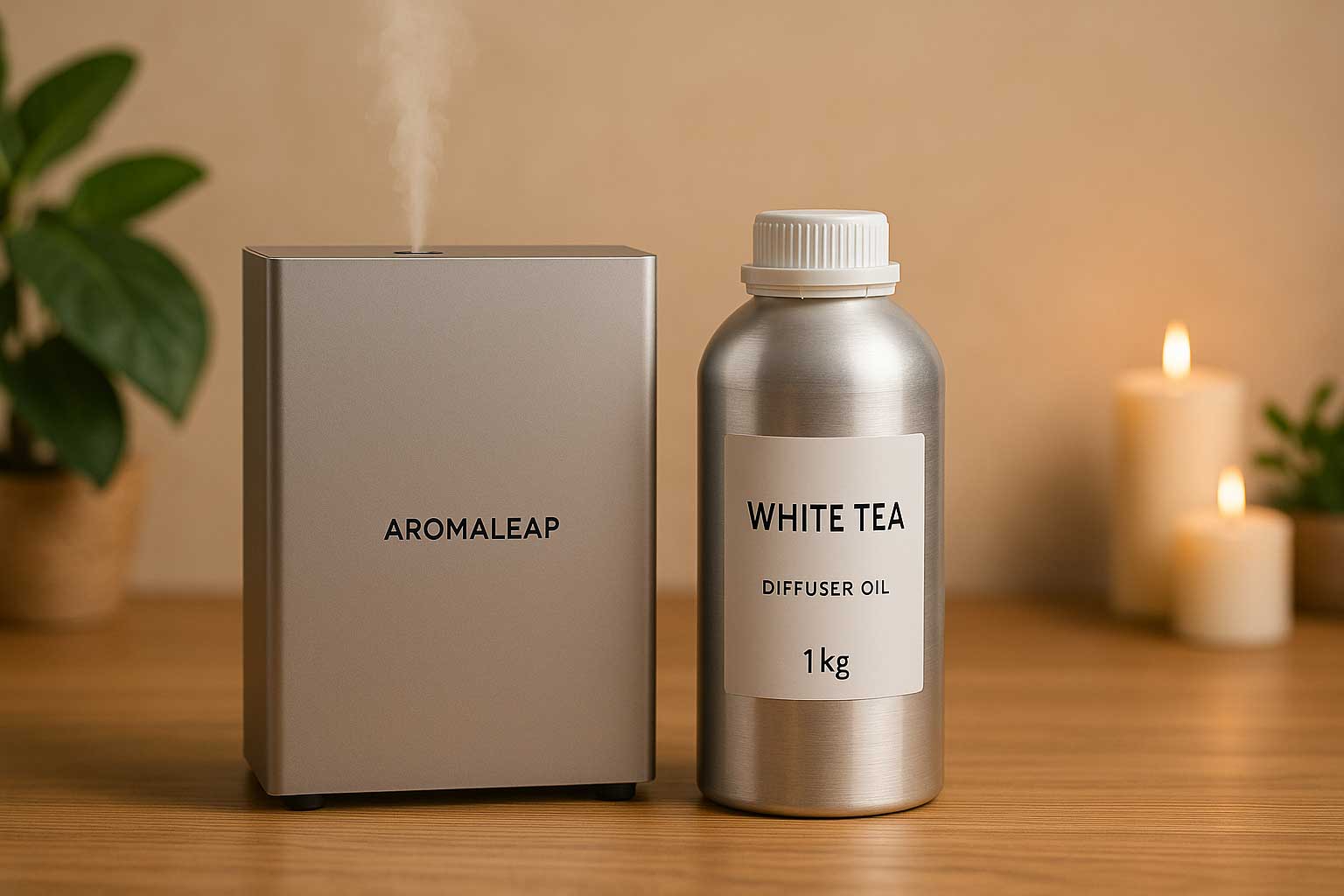
A bottle that looks right may still be unsuitable for dispensing or connecting to the diffuser. Approve a physical packaging sample where fit matters. Keep net mass and liquid volume distinct: a bottle labelled 1 kg does not establish an equivalent volume for every oil.
The sample-preparation footage shows a small bottle being filled. Keep a written fragrance reference with each sample and its feedback so the correct version can be reviewed. Evaluate machine compatibility and the final refill packaging for your own product brief.

If the oil, container or machine changes after testing, review whether the approved combination still applies. Do not fix a mismatch with an improvised dilution or unapproved solvent.
Give the customer the product identity, refill method and model-specific usage information they need. Confirm which required warnings, supplier details, batch identification, net quantity and destination-language information belong on the final label.
Ask the supplier to verify documents for the selected formulation and market, including relevant product specifications and safety or shipping information. Documents for a different fragrance or application should not be used as evidence for this refill. Final label requirements depend on the product and destination, so agree artwork after those details are reviewed.
Avoid unsupported “pure essential oil,” universal compatibility, health-benefit or certification claims. Keep fragrance descriptions separate from composition and suitability claims.
Compare the same fragrance reference, formulation stage, quantity, packaging, artwork scope and delivery terms. A bulk-liquid quote and a labelled retail refill quote include different work; matching bottle size alone does not make the offers equivalent.
| Quote item | Use the same basis for every offer |
|---|---|
| Oil and formulation stage | Use the same fragrance reference and intended application. State whether the offer is for a concentrate, ready-to-use refill or another agreed supply stage. |
| Quantity and units | State quantity by scent and packaging format. Keep mass, liquid volume and number of filled bottles distinct. |
| Packaging and filling scope | Identify the bottle, closure, seal, label, carton and any filling or label-application work included. |
| Sample and development work | Identify sample charges, development or tooling fees if applicable, and the agreed revision scope. |
| Delivery and payment terms | Use the same destination and delivery terms. Confirm freight inclusion, payment terms and any excluded charges. |
| Timing and approval basis | Separate sample work, artwork approval, component availability, production and transport in the proposed schedule. |
Ask AromaLeap to confirm MOQ, sample arrangements, packaging availability, production timing and shipping terms for the proposed scope. Custom scent development or new packaging can change the quotation. Agree any revision process, ownership or exclusivity requirements separately when they matter to your brand.
Retain the approved fragrance reference, machine model, refill packaging, artwork version and relevant documents. Use them to identify the next order clearly. Reconfirm current material and packaging availability and ask how any proposed change will be communicated before production.
Make the first enquiry simple: scent direction, approximate quantity and destination country are enough to start a conversation. Add a machine photo or packaging reference if available. Use waterless diffuser oil supply for direct-oil projects or the main diffuser-oil collection for broader scent selection.
You can start by evaluating an existing scent direction. Custom development is another route when your brief requires it. Confirm the selected formula, branding scope and commercial terms.
Do not promise universal compatibility. Define the approved equipment or finished system and test the offered formulation and packaging together.
No. A photographed pack format is not an MOQ. Ask for the applicable quantity and packaging options for your specific project.
Send the scent direction, approximate quantity and destination country. Include your machine model or packaging reference if available; the team can help clarify the remaining details.
Tell AromaLeap your preferred scents, estimated quantity and destination. Share a diffuser model or packaging idea if available, and ask about sample and pricing options.
Prefer email? info@aromaleap.com