
Pick the wrong aroma diffuser and the consequences are immediate: weak sell-through, rising return rates, and a brand image that feels off to every customer who opens the box. For wholesale buyers, private-label owners, and sourcing managers, a diffuser is not just a product — it is a direct reflection of the brand behind it.
This guide covers the four main diffuser types, the commercial factors that matter most — pricing, compliance, customisation, MOQ — and how to evaluate suppliers so you can source with confidence and avoid costly missteps.
The global aromatherapy diffuser market was valued at approximately USD 2.1–2.35 billion in 2025 and is projected to grow at a CAGR of 8.6–9.7% over the next decade, potentially reaching USD 4.1–4.6 billion by the early 2030s (Grand View Research, 2025; Fortune Business Insights, 2025; The Business Research Company, 2026). Demand is climbing across residential, hospitality, and commercial segments. The buyers who win in this space match diffuser technology to their brand position — not simply chase the lowest unit cost.
– Brand perception — The diffuser a customer unwraps shapes how they judge your entire product line. A flimsy device undermines even the best fragrance oil.
– Customer retention — Reliable performance and thoughtful design drive repeat orders and positive reviews. Complaints and returns do the opposite.
– Margin protection — Matching diffuser quality to your price tier avoids the squeeze that comes from over-specifying or under-delivering.
Four categories dominate the wholesale market. Each serves a different buyer profile and end-use scenario

Use water and high-frequency vibrations to create a cool, scented mist. Quiet, affordable, and double as mini humidifiers. Ultrasonic models are the largest segment — holding roughly 55–69% global market share in 2025 (Mordor Intelligence; Coherent Market Insights). Best for mass retail, home wellness, and gift sets.
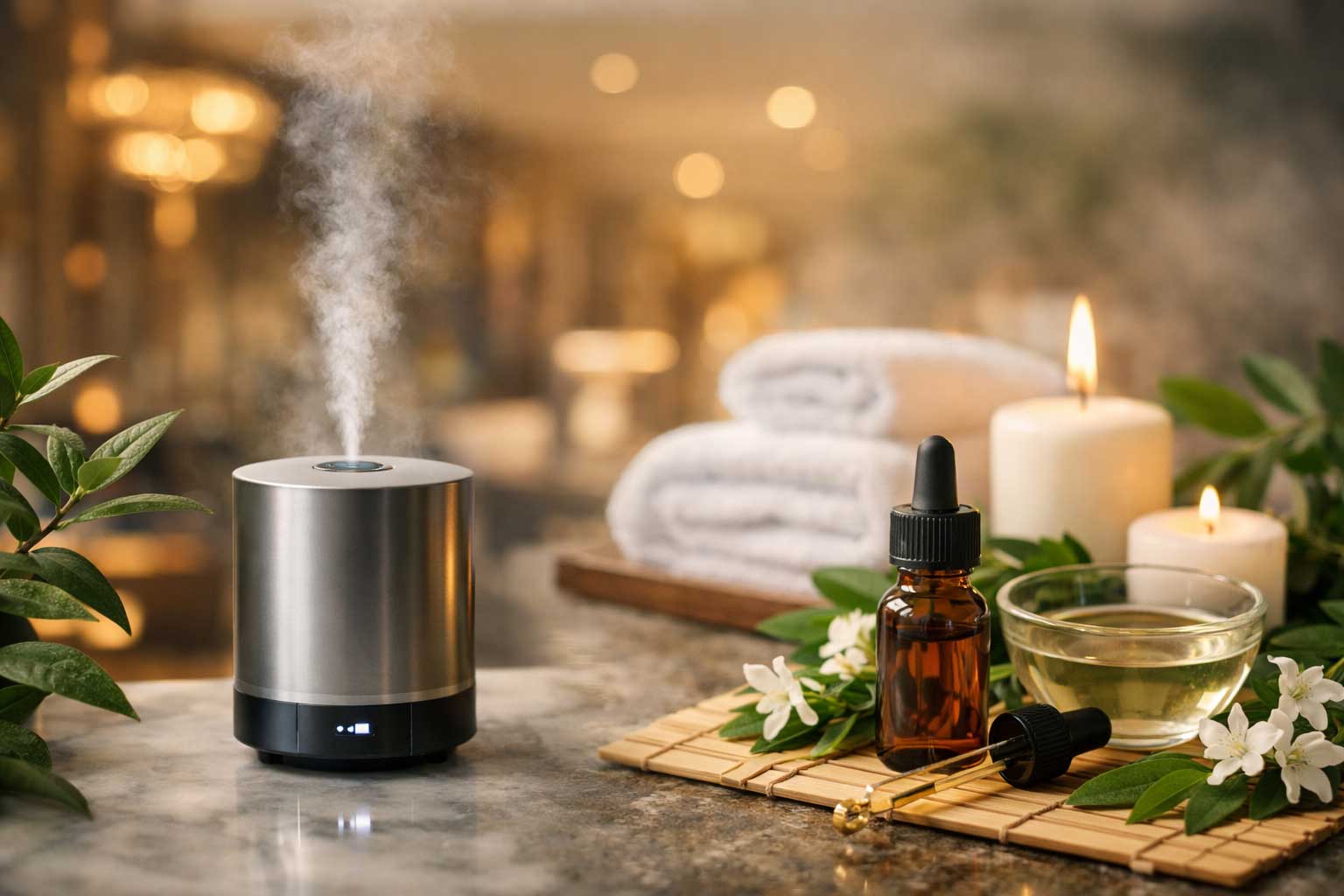
Deliver fragrance through direct evaporation or cold-air technology without water. Stronger, more concentrated scent output and usually a more refined design. Best for hotels, luxury retail, spas, and commercial-grade scenting programmes.

No electricity, no water. Natural reeds absorb oil and release fragrance through passive evaporation. Simple, decorative, and maintenance-free. Best for home décor lines, gift collections, and retail shelf displays.
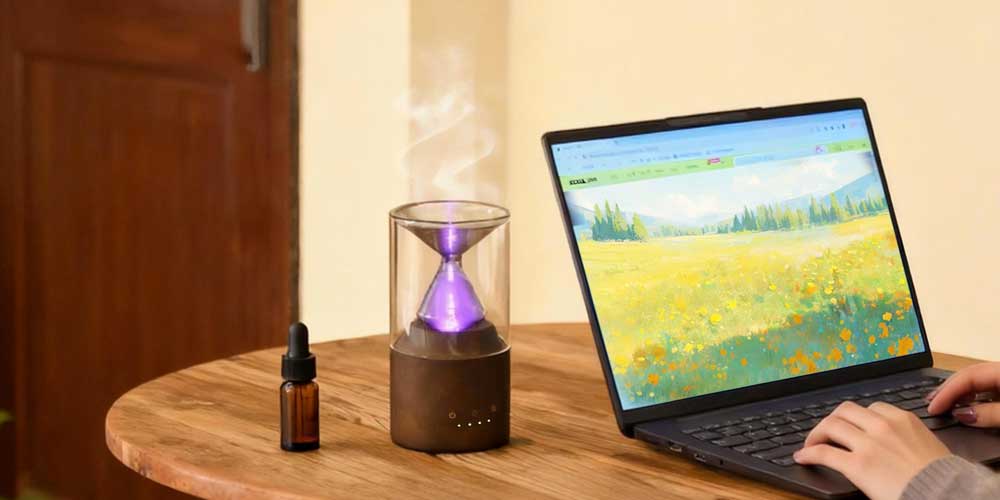
Use pressurised air to atomise pure essential oils into ultra-fine particles — no water, no heat. The strongest scent throw and full preservation of oil properties. Higher price point and higher oil consumption. Best for premium brands, aromatherapy professionals, and discerning wellness buyers.
| Feature | Ultrasonic | Waterless | Reed | Nebulizing |
|---|---|---|---|---|
| Water needed | Yes | No | No | No |
| Scent strength | Mild–moderate | Strong | Mild | Very strong |
| Coverage area | Small–medium | Medium–large | Small rooms | Medium–large |
| Maintenance | Regular cleaning | Low | Very low | Moderate |
| Noise level | Very quiet | Quiet | Silent | Low–moderate |
| Price position | Budget–mid | Mid–premium | Budget–mid | Premium |
| Best market fit | Home, wellness, gifts | Hotels, luxury, spas | Décor, gifts, retail | Aromatherapy, premium brands |
Need help matching a diffuser to your market?
Request free samples or speak with our wholesale team about your requirements.
Contact UsFour categories dominate the wholesale market. Each serves a different buyer profile and end-use scenario
– Scent throw and diffusion performance for the intended space size.
– Coverage area — a unit rated for 15 m² will disappoint in a 50 m² hotel lobby.
– Noise level — critical for bedroom and spa products.
– Ease of use and maintenance requirements. Products that need frequent cleaning generate more complaints
– Plastic — Cost-effective, lightweight. Suitable for entry-level and portable designs.
– Ceramic and glass — Signal premium quality. Pair well with home décor and gifting.
– Metal and wood-look — Modern sophistication or natural warmth, depending on finish.
Durability during transport is also a factor — fragile designs increase breakage risk and costs.
The key balance: unit cost vs. the retail price the market will accept. Over-specifying a mid-tier product erodes margin; under-delivering on a premium promise damages credibility.
Custom branding removes you from direct price competition with generic alternatives.
Beyond certifications, confirm quality consistency across production batches and establish clear QC protocols with the supplier.
Always confirm MOQ and lead time in writing before committing — especially ahead of Q3–Q4 peak seasons.
| Brand Type | Recommended Diffusers | Why It Fits |
|---|---|---|
| Wellness & home fragrance | Ultrasonic, reed | Affordable, consumer-friendly, aligns with self-care positioning |
| Premium & luxury | Waterless, ceramic/glass | Elevated design, stronger scent, premium materials |
| Hotels & spas | Waterless, commercial scent systems | Consistent coverage, professional-grade, supports signature scent programmes |
| Gift & retail | Compact ultrasonic, styled reed | Attractive packaging, accessible price, strong shelf appeal |
These are starting points. Many successful brands blend categories — for example, pairing a compact ultrasonic diffuser with a premium reed set in a gift bundle.

Supplier quality matters as much as product quality. Evaluate across these dimensions:
Start with a smaller trial order. Evaluate quality and service. Then scale
Run through this before placing your first wholesale order:
☐ Product type matches target end user and use case
☐ Scent performance tested and approved via physical sample
☐ Design and materials align with brand identity
☐ All required certifications confirmed (CE, FCC, RoHS, UL)
☐ MOQ, unit pricing, and payment terms agreed in writing
☐ Lead time and delivery schedule confirmed
☐ Customisation specs documented (logo, colour, packaging)
☐ QC process and inspection protocols reviewed
☐ Supplier responsiveness verified during pre-order communication
☐ Long-term supply capability and scalability assessed
Request product samples • Discuss private-label options • Get a wholesale quote
Contact us at info@aromaleap.com or visit aromaleap.com
Market data sources: Grand View Research (2025); Fortune Business Insights (2025); The Business Research Company (2026); Mordor Intelligence (2026); Coherent Market Insights (2025). Wholesale price ranges, MOQ, and lead-time figures are indicative industry averages.
AromaLeap is based in China and was founded in 2010. It is engaged in the professional design and manufacturing of essential oils, fragrance oils, and diffusers. With ISO certifications and two subsidiaries, our focus is on eco-friendly, long-lasting products.