
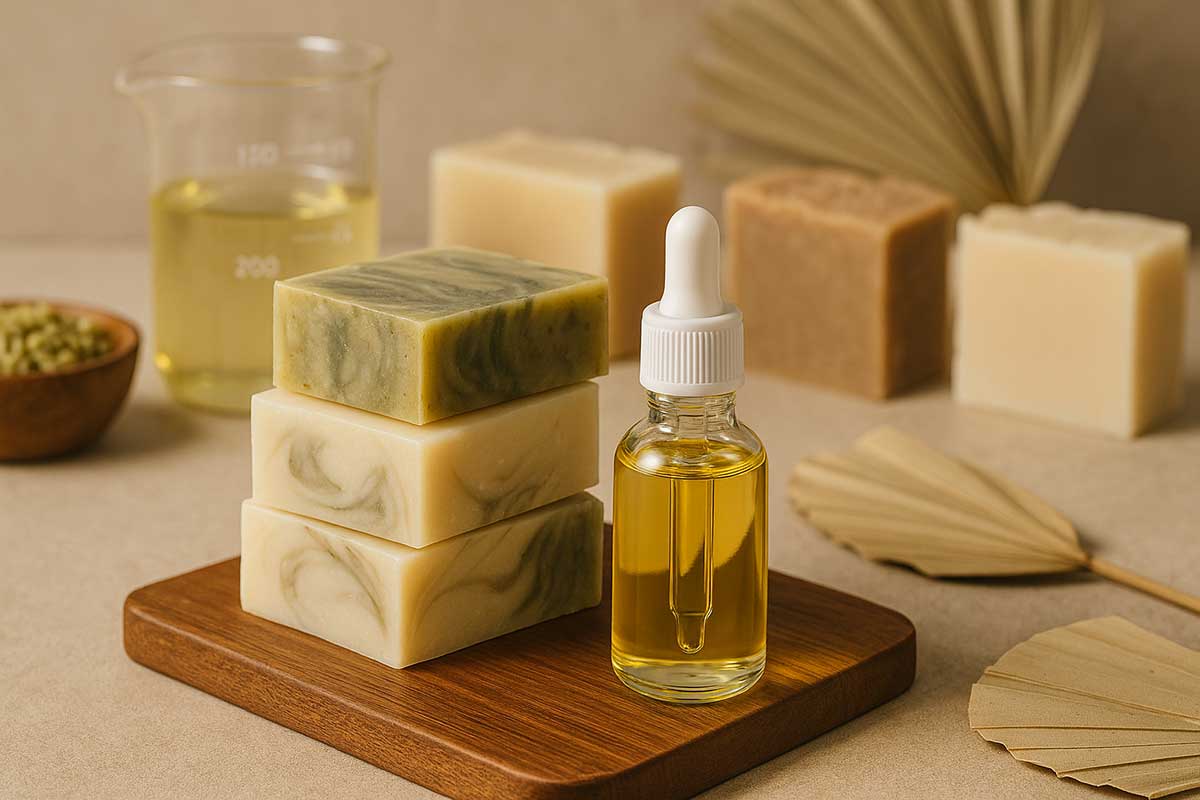
Define the soap type, shortlist scent directions, confirm the selected fragrance’s intended use and compare samples under consistent conditions. Record processing, appearance and finished scent separately before linking approval to the commercial order.
Choose the Soap Type Before the Scent Sample
“For soap” is not a complete formulation brief. Cold-process soap, hot-process soap, a melt-and-pour base and a liquid cleansing product involve different conditions. Identify the actual process and base before requesting a fragrance proposal.
| Soap project | What to identify | What the trial should record |
|---|---|---|
| Cold-process soap | Base and process reference; required design or working characteristics | Processing changes, color and scent after the defined evaluation |
| Hot-process soap | Process conditions and fragrance-addition requirements established by your team | Finished-bar character and scent under that process |
| Melt-and-pour soap | Exact supplied base and its instructions | Appearance, consistency and scent in that base |
| Liquid soap or hand wash | Cleansing base and finished-product format | Appearance, physical behavior and scent during the agreed evaluation |
Describe skin-cleansing soap or hand wash as its own application. For dishwashing, laundry or other cleaners, send a separate product brief so the formulation review matches the finished product.
Make a Shortlist From Clear Scent References
Choose a few contrasting scent directions that fit the brand, customer and intended soap format. Use the collection names to describe your preference, then request a soap-specific sample with a clear fragrance reference.
| Scent direction | Existing reference | Next step |
|---|---|---|
| Floral | Lavender, Rose or Magnolia | Explore the scent collection |
| Citrus / herbal | Lemon or Lemongrass | Explore the scent collection |
| Fresh | Mint, Cucumber or Ocean Pearl | Explore the scent collection |
| Creamy / sweet | Coconut, Yoghurt or Honey | Explore the scent collection |
A fragrance name describes a scent direction. Confirm the selected formulation and intended use, and keep the sample name or code consistent across feedback and ordering.
Confirm the Intended-Use Information
Ask what information is available for the selected fragrance and your finished-product category. Your formulation team should review its scope, relevant use information and handling instructions before the trial.
A product-specific maximum use level is not automatically the best working level for your soap. Set the trial within the appropriate guidance and define the performance you need.
Request fragrance-specific intended-use information, available safety data and any conformity information required for the selected soap project. IFRA’s guidance explains that a Certificate of Conformity concerns a specified intended use and does not replace a safety assessment. Confirm which documents are available for the exact fragrance and destination.
Compare Processing and Appearance, Not Only Bottle Scent
Ask your formulation team to define which processing and appearance observations matter for the selected soap process. Record changes in handling, texture, color, clarity or physical behavior where relevant, with the trial identity and observation point.
Keep the base, preparation conditions and comparison variables consistent. A photograph or note becomes useful when it identifies the sample, base version and stage being reviewed.
Use the evaluation method appropriate to your own soap process and base. Review each application separately when the product or process changes.

Evaluate the Finished Soap at a Defined Stage
Agree when and how the finished soap will be assessed using the process or base guidance relevant to your product. Record scent character and intensity separately from processing and appearance.
Compare samples at consistent evaluation stages. If a scent changes between the bottle and the finished bar, describe the change rather than assuming that a larger fragrance addition is the solution.
A retail label, desired color or marketing concept cannot establish finished-product suitability. Retain the trial result with the sample identity and ask for a revised direction if the sample does not meet the brief.
Give Feedback That Can Guide the Next Sample

| Field | What to record |
|---|---|
| Fragrance and trial identity | Supplier reference, sample code, version or batch information where supplied, and your trial ID. |
| Soap base and process | Cold/hot process, supplied melt-and-pour base, or liquid-soap formulation; record its version. |
| Trial preparation | Trial quantity, working level and its calculation basis, and the relevant process conditions defined by your team. |
| Observation point | Date, stage and agreed conditions under which the comparison was made. |
| Separate observations | Fragrance preference, processing behavior and appearance or finished-product observations. |
| Decision and next step | Approval status, requested scent adjustment or further trial, and the reference to use for the next discussion. |
Report fragrance preference, process observations and requested changes as separate points. A request to change scent character is easier to review when it is not mixed with an unexplained processing result.
Connect Sample Approval to the Commercial Order
Keep the approved sample reference with the soap-base and purchasing records. Confirm fragrance identity, quantity, container, label scope, required documents, commercial terms, schedule and delivery arrangements before ordering.
If the base, process, fragrance or other relevant variable changes, review what needs to be reevaluated. Approval is linked to the system tested, not just to a scent name.
Explore the soap fragrance collection for your next sample request, or the manufacturer and packaging hub for a broader range.
Does a scent name or bottle label confirm suitability for soap?
Use names and images to shortlist fragrance directions. Confirm the exact formulation and its intended use, then evaluate the relevant sample in your actual soap base.
Should I use the same fragrance percentage for every soap?
Review the selected fragrance’s intended-use information, applicable requirements and the actual base or process guidance. Have your formulation team define and evaluate an appropriate working level for that product.
Can I approve a fragrance from the bottle scent alone?
A bottle impression helps shortlist the scent direction. Review the selected fragrance in the actual soap process and finished product before approving its application performance.
What should I do if the sample does not meet the brief?
Record the sample identity, base, trial conditions and observations. Explain the scent change or result you want the team to review, then discuss a revised direction or another trial before approving supply.