
Wholesale Buyer Guide · Waterless Diffuser Cluster
Waterless Diffuser Customization Options for Wholesale Buyers
Branding a stock model is very different from developing a new diffuser. This guide explains which waterless diffuser customization options buyers should discuss first, which changes are usually model-specific, and what should be approved before a wholesale order moves forward.
AromaLeap Editorial Team · Updated August 2026
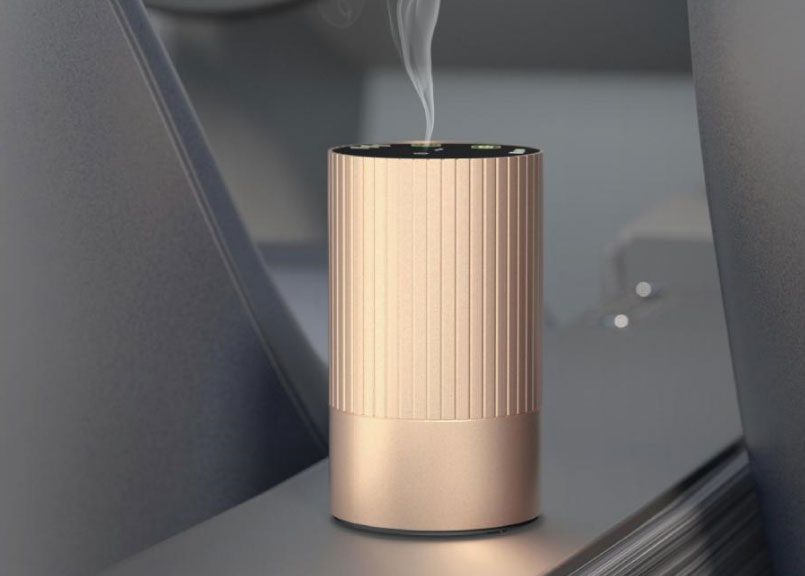
Wholesale waterless diffusers can commonly be customized at four levels: branding, appearance, packaging, and selected model functions. Bottle/refill configuration, controls, power options, accessories and deeper structural changes depend on the exact product. New housings, electronics, moulds or atomization structures should be treated as a separate OEM/ODM development project rather than assumed to be a simple private-label change.
Start With Scope
Four Levels of Waterless Diffuser Customization
For B2B sourcing, the useful question is not “Can this diffuser be customized?” but “Which parts of this exact model can be changed without creating a different engineering project?” AromaLeap’s waterless diffuser manufacturer page remains the primary destination for equipment selection, wholesale sourcing and model-specific feasibility.
Branding
Discuss logo placement, label direction, product marking, manuals and other brand elements that can be applied to the selected model.
Appearance & Finish
Review colour direction, surface finish and available material/appearance options. Feasibility depends on the housing and production method of the exact diffuser.
Packaging & Accessories
Coordinate retail box artwork, protective inserts, instructions, labels, barcodes, included accessories and the refill/bottle presentation where applicable.
Functional / Structural Changes
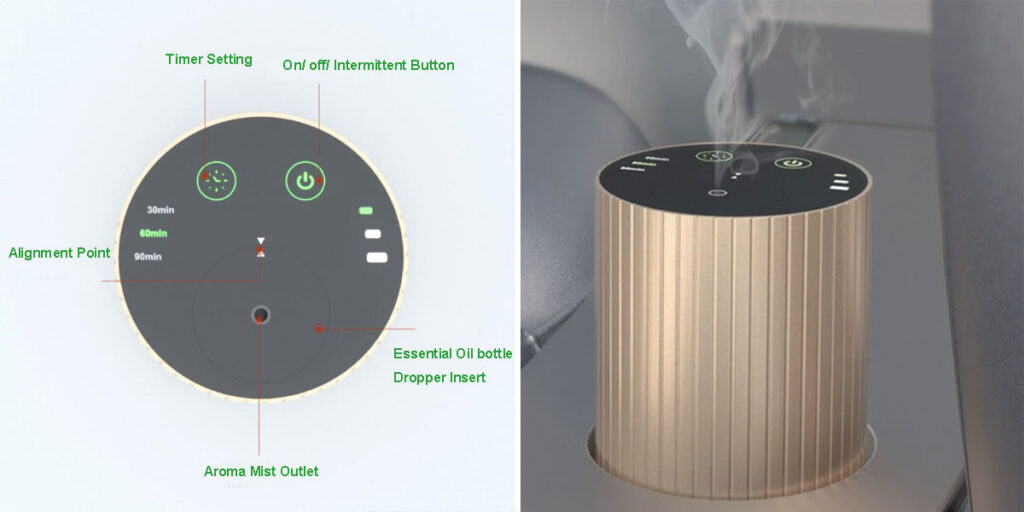
Timer settings, controls, power configuration, bottle system or deeper changes may require separate testing. New housing, tooling, electronics or atomization architecture belongs in an OEM/ODM review.
Private Label vs OEM/ODM
Which Customization Route Fits the Project?
The more a change affects structure, tooling, electronics or performance, the more it should be separated from a standard private-label project.
| Customization Area | Typical Buyer Request | How to Treat It | What to Confirm Before Approval |
|---|---|---|---|
| Logo & Product Marking | Add brand logo, model name, label or product identification. | Usually private-label scope, subject to the model and suitable application method. | Artwork file, size, position, colour, application method and approved appearance sample. |
| Colour & Surface Finish | Match a brand palette or create a different visual direction. | Model-specific customization. Some finishes may be available without structural change; others may not. | Colour reference, finish standard, acceptable variation and the actual housing/material. |
| Retail Packaging | Custom box, insert, manual, barcode and branded presentation. | Common private-label work, but packing structure must protect the selected diffuser and accessories. | Artwork, dimensions, insert, manual language, labels, barcode, accessories and transport protection. |
| Bottle / Refill System | Use a specific oil bottle, closure or refill format. | Compatibility-sensitive. It should be reviewed with the actual diffuser design and intended oil. | Bottle fit, connection, feed path, closure, oil compatibility and refill instructions. |
| Controls & Settings | Timer, output settings, display or selected control changes. | Function-specific. Availability depends on the model, controller and software/electronics configuration. | Required functions, control logic, user interface, testing and final instructions. |
| New Housing / Electronics / Tooling | Create a substantially different diffuser or unique structure. | Separate OEM/ODM development. Do not treat it as a routine logo or packaging change. | Design brief, engineering feasibility, tooling, prototype, test plan, approval criteria and commercial terms. |
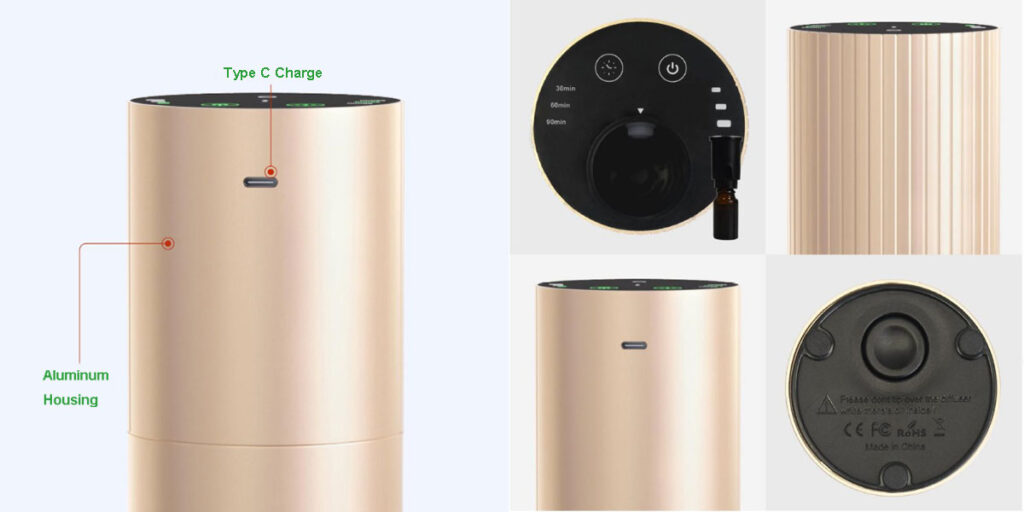
Branding & Packaging
Approve the Customer-Facing Details as One System
Logo, finish and packaging should not be approved as isolated artwork jobs. They need to work with the actual diffuser, its accessories, refill method and destination-market instructions.
- Logo: provide vector artwork and agree on placement, size, colour and application method.
- Colour and finish: use an agreed visual reference and confirm what tolerance or variation is acceptable.
- Packaging: coordinate the product, accessories, protective insert, manual, labels, barcode and outer shipping protection.
- Instructions: make sure the manual matches the final control functions, power configuration and refill/maintenance method.
- Repeat orders: keep approved artwork, packaging files and a reference sample under version control.
Oil & Refill Compatibility
Do Not Separate the Diffuser From the Oil It Will Use
A direct-oil diffuser and its fragrance liquid should be evaluated together when bottle fit, oil pathway, atomization, residue or cleaning can affect performance.
Not every essential oil or fragrance formulation behaves the same way in every waterless diffuser. For fragrance liquid specifically intended for direct-oil systems, review AromaLeap’s waterless diffuser oil page. Keep the hardware decision on the dedicated waterless diffuser page so the equipment and liquid search intents do not compete.
- Identify the exact diffuser: bottle-fed, reservoir-based and other direct-oil formats can use different internal pathways.
- Use the intended fragrance: sample evaluation should reflect the oil or formulation planned for the finished product whenever possible.
- Review cleaning guidance: maintenance procedures and acceptable cleaning liquids are model-specific.
- Freeze the approved combination: record the diffuser model, oil reference and relevant configuration for repeat purchasing.
From Brief to Approved Reference
A Safer Customization Workflow for Wholesale Buyers
A good process reduces ambiguity before the bulk order rather than trying to solve specifications after production has begun.
Select the Base Model
Choose the diffuser technology, product format and intended application before discussing decorative changes.
Separate Must-Haves
List required branding, finish, packaging, controls, power, bottle/refill and accessory requirements separately from optional ideas.
Review Feasibility
Confirm which requests fit the selected model and which would require deeper OEM/ODM development, tooling or functional evaluation.
Evaluate Samples
Check appearance, function, oil compatibility and packaging as relevant to the final configuration. Do not approve from artwork alone.
Freeze the Specification
Record the approved model, artwork, colour/finish, accessories, packaging, oil reference and any agreed function settings.
Use the Approval for QC
Use the approved reference and written specification as the basis for production inspection and repeat-order change control. AromaLeap’s diffuser quality-control page explains the broader factory QC approach.
Buyer Checklist
What to Include in a Waterless Diffuser Customization RFQ
A precise brief gives a supplier enough information to review feasibility without guessing about the model, market or customization scope.
Procurement Decision
When Should You Use Private Label, and When Do You Need OEM/ODM?
Use private label when an existing model already meets the core product requirement and the project mainly needs branding, finish, packaging or other supported configuration changes. Use a deeper custom diffuser OEM/ODM process when the brief requires a new housing, structure, tooling, electronics or substantially different function set.
Continue the Waterless Diffuser Project
Use the Right AromaLeap Page for the Next Decision
These destinations serve different buyer needs, so the article can support the money page without turning itself into another manufacturer landing page.
Wholesale Buyer FAQ
Waterless Diffuser Customization FAQ
What can be customized on a wholesale waterless diffuser?
Depending on the exact model, projects may include logo/product marking, colour or finish direction, packaging, manuals, labels, accessories, bottle/refill configuration and selected control or power options. New housings, electronics, tooling or atomization structures require a separate feasibility review.
Can AromaLeap add my logo and private-label packaging?
Branding and packaging can be reviewed for the selected diffuser model. Provide logo artwork, desired placement, packaging concept, target market and required text so the feasible application method and packaging scope can be confirmed before sampling.
Can I change the colour or material of a waterless diffuser?
Some colour, finish and material directions may be available, but they are model-specific. Confirm the housing material, finish process, colour reference and acceptable appearance variation for the product you select.
Can I customize timer, output or control functions?
Function changes depend on the selected model, controller, electronics and software configuration. Treat them separately from cosmetic branding and confirm feasibility, testing and final user instructions before approval.
What is the difference between private label and OEM/ODM customization?
Private-label work generally starts from an existing model and focuses on supported branding, finish, packaging or configuration changes. OEM/ODM development becomes more appropriate when the project requires a new structure, housing, tooling, electronics or substantially different function set.
What determines the MOQ for a customized waterless diffuser?
MOQ can depend on the selected model, components, colour/finish, logo method, packaging, accessories, bottle system, tooling and overall customization scope. It should be confirmed after the exact configuration is defined rather than assumed from a generic range.
How long does waterless diffuser customization take?
Timing depends on whether the project uses an existing model or requires new tooling/development, as well as artwork, sample revisions, packaging, testing, quantity and the current production schedule. Confirm the project timeline after the specification is clear.
Should I test the intended diffuser oil before approving a customized model?
Yes, whenever oil compatibility can affect bottle fit, oil draw, atomization, residue or maintenance. Evaluate the intended oil or fragrance in the intended diffuser configuration before bulk approval where practical.
What should be included in the final approved sample?
The appropriate approval reference depends on the project, but buyers may need to confirm the exact model, logo/marking, colour/finish, functions, accessories, oil/bottle configuration, packaging artwork, manual and other agreed specifications before production.
How can I reduce variation on repeat orders?
Keep the approved sample, written specification, artwork, packaging files, oil reference and relevant settings under version control. Review any proposed component, finish, document or packaging change before approving a repeat order.
Ready to Define the Project?
Start With the Waterless Diffuser Model, Then Customize
If you already know the target application, preferred product style, branding, packaging and function requirements, move to AromaLeap’s primary waterless diffuser page and send a clear project brief for model-specific review.
Target application · destination market · preferred model/reference · estimated quantity · logo artwork · finish direction · packaging scope · required functions · intended oil · required documents.