
Lemongrass essential oil has a way of waking up your senses before you even twist the cap. Its bright, citrusy, slightly herbal aroma can cut through a heavy day, clear the air in your home, and instantly feel like a breath of fresh air. For many people, it’s the oil they reach for when they want their space to feel cleaner, their mind to feel lighter, and their self-care routine to feel a little more uplifting.
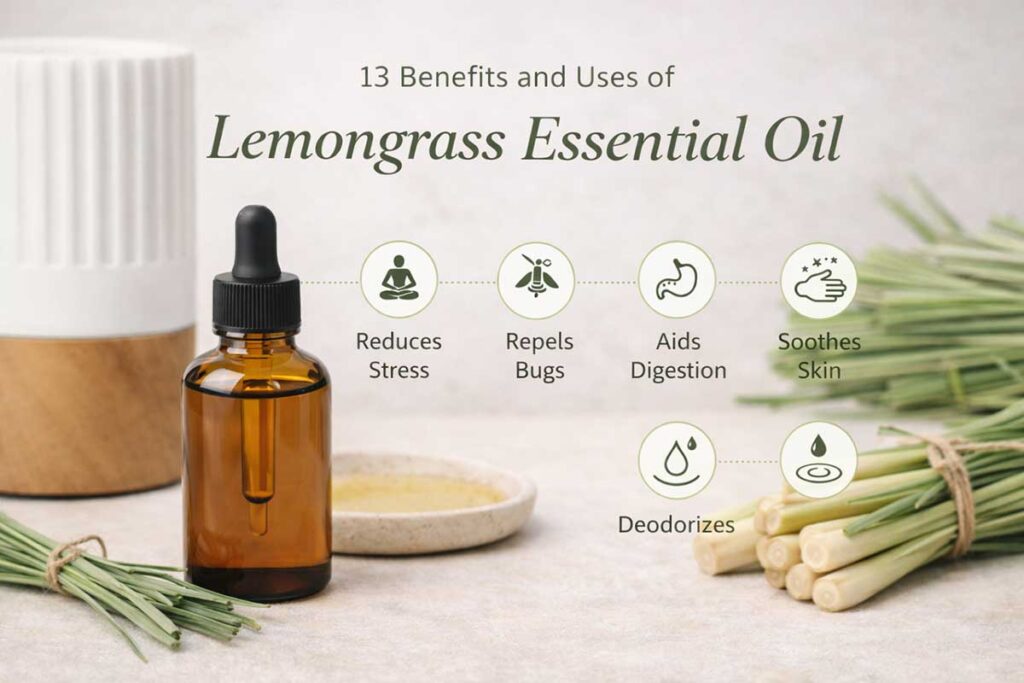
In this guide, we’ll explore 13 benefits and uses of lemongrass essential oil, drawing on both traditional use and modern aromatherapy practice. You’ll see how this oil can fit into everyday life—from your diffuser and skincare, to natural cleaning and simple relaxation rituals—while also keeping safety, dilution, and realistic expectations in mind. The goal is not to promise miracles, but to show you practical, enjoyable ways to use lemongrass essential oil as part of a more natural, intentional lifestyle.
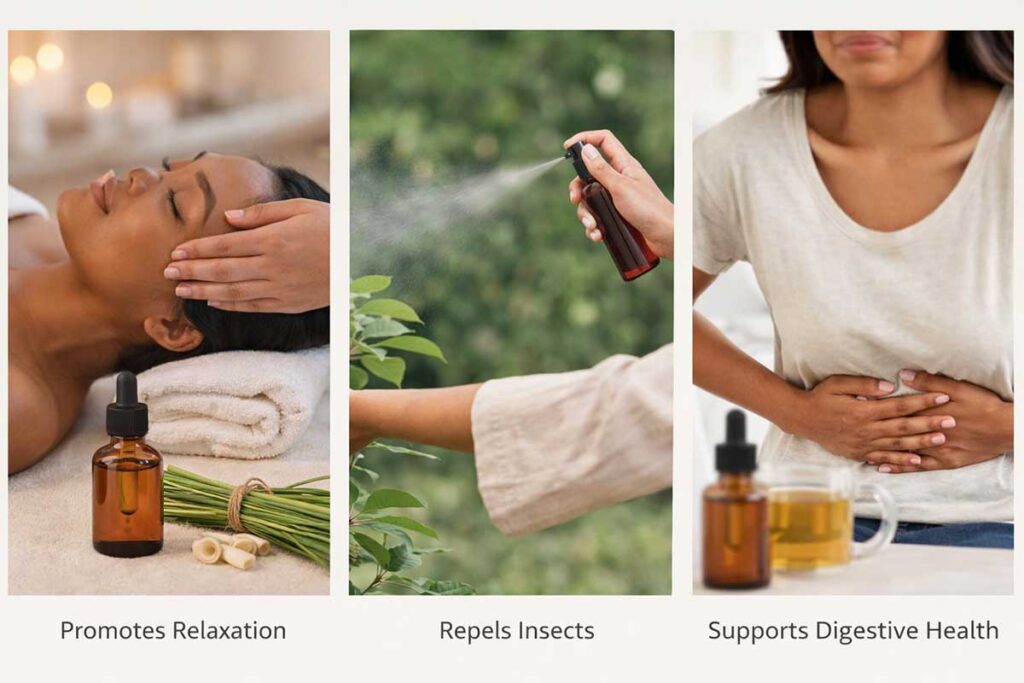
There’s a reason many people reach for lemongrass essential oil on heavy or tiring days. Its fresh, lemony scent can feel clearing and energizing at the same time, which makes it a popular choice in blends designed to lift the mood and ease everyday stress.
Many aromatherapy practitioners like to diffuse lemongrass during busy workdays, housework, or after a long commute, when you want the room to feel lighter and your mind to feel less weighed down.
A simple way to try this is to add a few drops to your diffuser while you journal, stretch, or practice a short breathing exercise. The scent itself won’t solve deep emotional issues, but it can become a helpful part of a calming ritual that tells your body and mind, “You’re safe, you can slow down now
That same crisp, “sharp” aroma that makes lemongrass feel so fresh can also make you feel more awake and mentally switched on. Many people enjoy using it in home offices, study areas, or creative spaces when they want to stay alert without reaching for yet another cup of coffee.
Paired with good lighting, movement breaks, and hydration, lemongrass can be a small but enjoyable part of your focus toolkit.
Try diffusing it while you plan your day, answer emails, or study, or place a cotton pad with a drop (kept out of reach of children and pets) near your workspace.
Some also like to combine lemongrass with other “clarity” oils, such as rosemary or peppermint, for a more complex, refreshing blend—always keeping total drops within safe limits.
Lemongrass essential oil contains aromatic compounds, such as citral, that are often discussed in relation to antioxidant activity. In simple terms, antioxidants help neutralize unstable molecules known as free radicals, which can otherwise contribute to cellular stress.
Most of the research around lemongrass and antioxidants comes from lab or animal studies rather than large human trials, so it’s important to see this as “potential,” not a proven cure for any condition.
Still, knowing that lemongrass has this kind of profile is one reason people feel comfortable using it as part of a broader wellness routine. Think of it as a small, aromatic support alongside the real foundations of health: balanced nutrition, movement, sleep, and medical care where needed. Essential oils are the finishing touches, not the whole painting
If you’ve ever cleaned with a citrusy essential oil, you know how much fresher a room can feel afterward. Lemongrass essential oil is often used in natural cleaning recipes and room sprays because it has a reputation for helping to combat unwanted odors and supporting a cleaner-smelling environment. Its strong, lemon-fresh aroma can help mask smells from cooking, pets, shoes, and damp spaces, making your home feel more inviting.
You can make a simple DIY surface spray by adding a few drops of lemongrass oil to a spray bottle filled with water and a small amount of natural surfactant (like castile soap), shaking well before each use. Always test on a small, hidden area first, avoid delicate surfaces, and never rely on essential oils alone for serious disinfection needs—household hygiene still depends on proper cleaners and good habits.
When handled with care, lemongrass essential oil is sometimes used in skincare for oily or blemish‑prone complexions. Its fresh, astringent character makes it a popular addition (at very low dilutions) to toners and spot‑treating blends designed to help skin feel more balanced and less greasy. Some people find that this kind of routine helps their skin feel cleaner and more refined, especially in hot or humid climates.
However, lemongrass is a strong oil, and this is where safety really matters. It should always be diluted well in a carrier oil or unscented product, used sparingly, and patch‑tested on a small area of skin at least 24 hours before regular use. If you have very sensitive, reactive, or broken skin—or if you’re already under the care of a dermatologist—it’s wise to talk with a professional before adding any essential oil to your skincare routin
Lemongrass essential oil is a popular ingredient in many natural insect‑repellent sprays and candles because of its strong, lemony aroma. Used outdoors on patios or near doorways (in diffusers, candles, or room sprays), it can help make your space less appealing to mosquitoes and other bugs. It won’t provide the same level of protection as conventional repellents, but it can be a pleasant, plant‑based option for light use or for freshening the air after you’ve been outside.
To use it more safely, keep lemongrass oil in well‑ventilated areas and avoid applying undiluted oil directly to the skin. If you do choose a topical repellent blend, make sure it’s properly diluted in a carrier oil or lotion and avoid sensitive areas like the face, eyes, and any broken skin.
Lemongrass essential oil is excellent for making a room smell cleaner and brighter in just a few minutes. Its sharp, citrusy scent can help cut through lingering cooking smells, pet odors, or the stuffy feeling that builds up in closed spaces. Many people enjoy adding a few drops to a diffuser after cleaning, doing laundry, or hosting guests, so the whole home feels refreshed and “reset.”
You can also use lemongrass in simple DIY room sprays—just remember to shake the bottle before each use and avoid spraying directly onto delicate fabrics or polished surfaces. Over time, using a signature scent like lemongrass can become part of the “scent identity” of your home, something friends and family start to associate with comfort and cleanliness when they walk in.
Although lemongrass feels bright and energizing at first, many people find that, in the right blend, it can also support evening relaxation. When paired with softer, more traditionally soothing oils like lavender or cedarwood, it adds a clean, uplifting note that keeps the blend from feeling too heavy. This can be helpful if you want to unwind at the end of the day without feeling drowsy or overwhelmed by overly sweet scents.
Try adding a drop or two of lemongrass to a diffuser blend you use in the hour before bed while you dim the lights, stretch gently, or read. The key is consistency: using the same scent as part of a nightly wind‑down routine trains your body to associate that aroma with slowing down, putting screens away, and preparing for rest.
Although lemongrass feels bright and energizing at first, many people find that, in the right blend, it can also support evening relaxation. When paired with softer, more traditionally soothing oils like lavender or cedarwood, it adds a clean, uplifting note that keeps the blend from feeling too heavy. This can be helpful if you want to unwind at the end of the day without feeling drowsy or overwhelmed by overly sweet scents.
Try adding a drop or two of lemongrass to a diffuser blend you use in the hour before bed while you dim the lights, stretch gently, or read. The key is consistency: using the same scent as part of a nightly wind‑down routine trains your body to associate that aroma with slowing down, putting screens away, and preparing for rest.
Lemongrass essential oil can be a refreshing addition to hair care routines, especially for those who struggle with an oily or musty‑smelling scalp. A drop or two blended into shampoo, conditioner, or a scalp oil can help your hair feel cleaner and more invigorated, turning a normal wash into a more spa‑like experience. Many people enjoy the way the scent lingers lightly, giving that “just washed” feeling a little longer.
To keep things safe, avoid applying the undiluted oil directly to your scalp. Instead, mix it into a carrier oil or product, and be very careful to keep it away from your eyes. Start with a very small amount to see how your scalp responds, and discontinue use if you notice any irritation, itching, or redness.
After a long day on your feet, a warm foot soak with a hint of lemongrass essential oil can feel incredibly soothing. The combination of warmth, water, and that clean, citrusy aroma helps your feet feel fresher and less heavy, especially if you’ve been in shoes for many hours. Many people like to pair lemongrass with Epsom salts for a simple at‑home “spa bowl” that helps them unwind in the evening.
To try this, fill a basin with warm water, add Epsom salts, then stir in just a drop or two of lemongrass pre‑mixed with a dispersant (like a bit of carrier oil) so it doesn’t sit undiluted on the water surface. Always dry your feet thoroughly afterward, and avoid using essential oils on cracked skin or open cuts.
If you enjoy making your own gentle, low‑tox products, lemongrass essential oil can become a signature scent in your cleaning routine. Just a few drops added to homemade surface sprays, mop water (for suitable floors), or reusable cleaning cloths can leave your kitchen or bathroom smelling fresher without resorting to heavy synthetic fragrances. This can be especially appealing if you’re sensitive to conventional cleaners but still want your home to smell clean and inviting.
Remember that essential oils are highly concentrated, so a little goes a long way. They should be used alongside appropriate cleaning agents, not instead of them, and you’ll always want to label your DIY blends clearly, keep them out of reach of children and pets, and test on small areas first to avoid damaging delicate surfaces.
One of the most enjoyable things about lemongrass essential oil is how easily it fits into personalized self‑care rituals. From a few drops in a diffuser during your morning journaling, to a diluted body oil after a shower, to a fresh‑smelling post‑workout massage blend, it adds a bright, clarifying note that can make simple routines feel more intentional and uplifting. Over time, this scent can become a cue for your nervous system that “this is my time,” helping you switch from doing mode to being mode.
You might experiment with combining lemongrass with other favorites—like lavender for balance, eucalyptus for a spa‑like feel, or sweet orange for an even sunnier blend—always watching your total drop count and keeping dilution within safe limits. By treating lemongrass as a supportive accent, not a cure‑all, you can build rituals that feel both enjoyable and sustainable in everyday life.
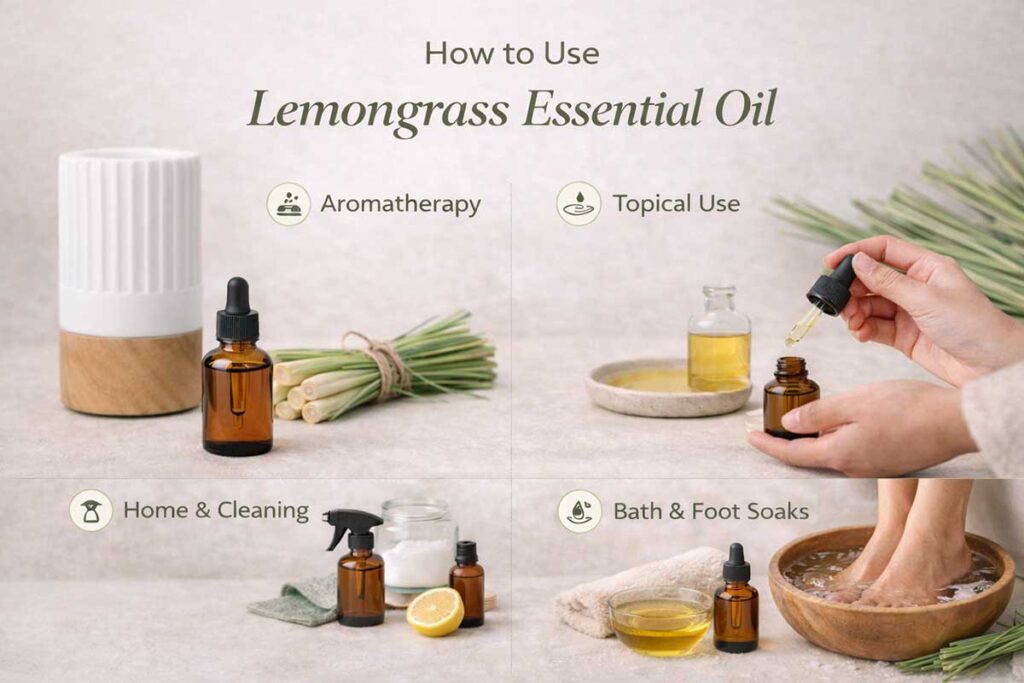
Lemongrass essential oil is very concentrated, so a gentle approach works best in everyday life. Always start with small amounts and see how your body and space respond before building it into your routine.
Add 3–5 drops of lemongrass essential oil to a diffuser filled with water, following the device instructions.
Use it during work, cleaning, or evening wind‑down to freshen the air and support mood or focus.
For a quick “on‑the‑go” option, place 1 drop on a cotton pad and keep it near your desk (away from children and pets), or inhale gently from the pad for a few slow breaths.
Blend lemongrass essential oil into a carrier oil (like jojoba, sweet almond, or fractionated coconut oil) before applying to the skin.
A general guideline for body use is about 1–2 drops of essential oil per teaspoon of carrier oil; for facial products, stay even lower and be extra cautious.
Use this kind of blend for short, intentional rituals: a quick neck and shoulder massage after work, a post‑exercise leg massage, or a light application to the wrists or ankles for a fresh scent.
Add a few drops to a DIY room spray (water plus a small amount of natural solubilizer or alcohol) to refresh bathrooms, entryways, or living areas.
Mix a drop or two into a bucket of warm water with your chosen cleaner for mopping suitable floors, or into a reusable cloth spray for countertops that tolerate essential oils.
Always label homemade blends clearly, keep them out of reach of children and pets, and test on a small, hidden patch of any surface first.
For a foot soak, dissolve Epsom salts in warm water, then mix 1–2 drops of lemongrass essential oil into a small amount of carrier oil before adding it to the basin.
Avoid adding undiluted oil directly into bath water, as it can cling to the skin and cause irritation.
Never use essential oils in the bath if you have broken skin, open cuts, or known sensitivities without professional guidance
Not all essential oils are created equal, and quality makes a real difference to both aroma and safety. Choosing well means you’re more likely to get an oil that smells true to the plant and behaves as expected in blends.
What to look for on the label
Botanical name (for example, Cymbopogon citratus or Cymbopogon flexuosus), not just “lemongrass oil.”
Clear indication that it’s 100% pure essential oil, with no added synthetic fragrances or fillers.
Country of origin and extraction method, typically steam distilled for lemongrass.
Signs of a trustworthy brand
Transparent information about sourcing, testing, and quality standards.
Batch or lot numbers that reflect consistent quality control.
Readily available safety information and responsible usage guidance, rather than exaggerated claims.
At AromaLeap, you can highlight that your lemongrass essential oil is carefully sourced, tested for purity, and handled with attention to both efficacy and user safety. That combination of clarity and care helps readers feel more confident choosing an oil for their home.
Essential oils are supportive tools, not stand‑alone treatments. Knowing when to put the bottle down and call a professional is a key part of using them wisely.
You should seek medical advice if:
You experience severe or persistent skin reactions, such as swelling, blistering, or intense itching after using lemongrass oil.
You develop breathing difficulties, chest tightness, or strong dizziness when exposed to the aroma.
Digestive, sleep, pain, or mood issues you’re trying to support with essential oils continue, worsen, or interfere with daily life.
If a child or pet accidentally ingests essential oil, or if a large amount gets onto the skin or into the eyes, contact emergency services or poison control immediately. Having a low‑ego approach—where oils complement, and doctors lead on health decisions—keeps your wellness routine grounded and safe.
Lemongrass essential oil offers a bright, citrusy aroma that can support mood, focus, freshness, and simple self‑care rituals when used thoughtfully.
The safest way to enjoy it is through gentle diffusion, careful dilution in carrier oils or products, and light use in home and cleaning recipes.
Paying attention to quality, labeling, and your own body’s responses helps you get the most from each drop while protecting your skin and respiratory system.
When you pair a high‑quality lemongrass essential oil with realistic expectations and good safety habits, it becomes a small but meaningful part of a more intentional, sensory‑rich lifestyle—exactly the kind of experience you can offer through AromaLeap
AromaLeap is based in China and was founded in 2010. It is engaged in the professional design and manufacturing of essential oils, fragrance oils, and diffusers. With ISO certifications and two subsidiaries, our focus is on eco-friendly, long-lasting products.